

On the first Saturday in November, farmer Skippy turned up for work in the early morning. Plum, our heavily pregnant sow, had given birth to her piglets overnight. So this month we’ve asked Skippy to tell us more about Plum and her piglets, and the Berkshire breed generally. Not forgetting proud dad Mars…
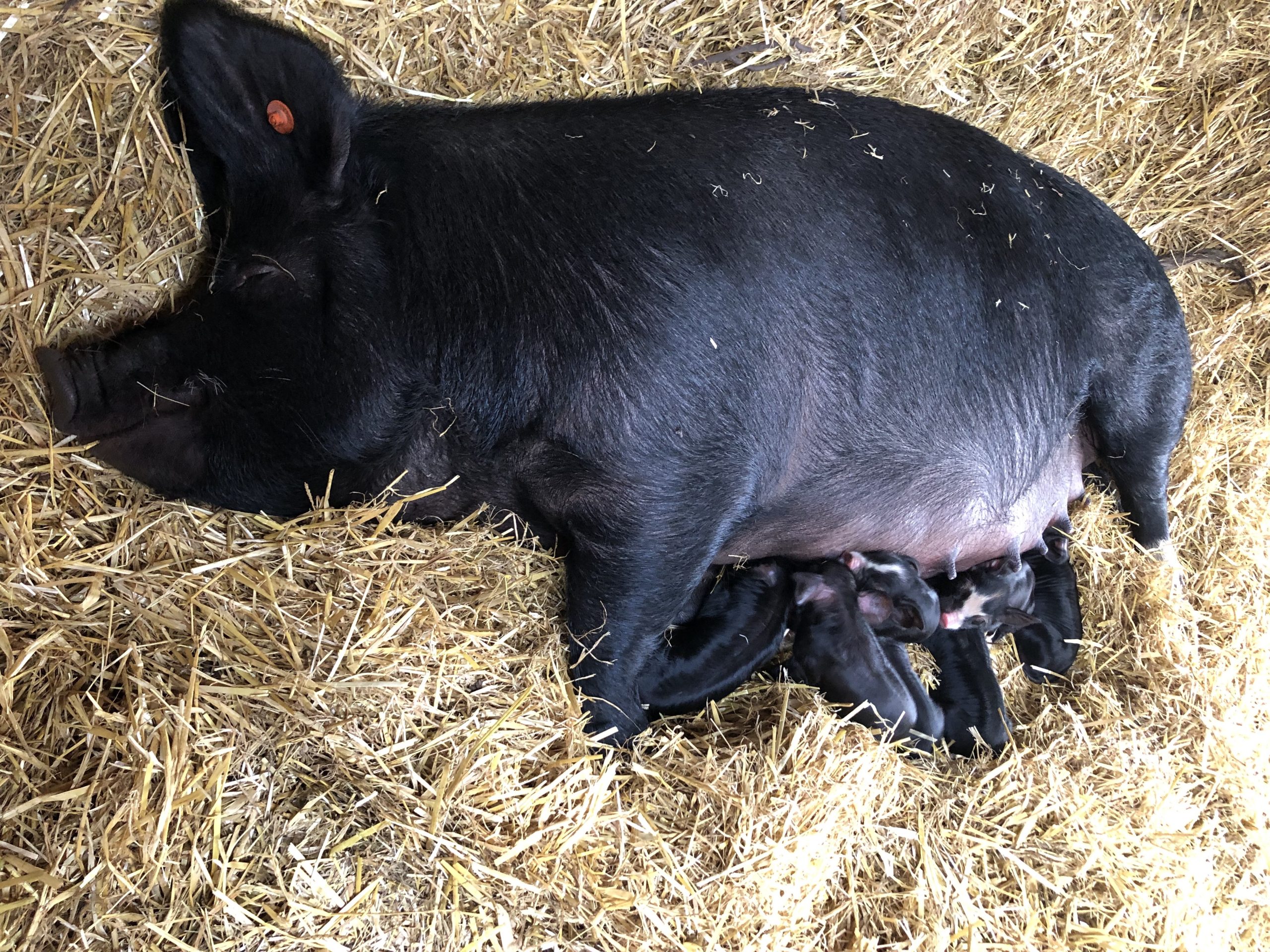
We couldn’t be more proud of Plum, who has once again given birth to a litter of lovely, lively, cute, cheeky little piglets. All the staff and volunteers at the farm, and the many visitors we have seen laughing and smiling as they look on at Plum and her little ones, are feeling the sense of hope and promise which comes with new lives.
It is always a privilege to be the one who arrives at the farm early in the morning to be greeted by the sounds of Plum calling her piglets to suckle. As you approach the shed in the dawn light you’re hoping that all is well. It is such a joy when you find a contented Plum nursing her beautiful new piglets.
As you check that Plum and her little ones are healthy, stroking the clean silky coats of the piglets and rubbing Plum’s cheek just where she likes it, Plum always looks at you out of the corner of her eye, proud to share her happiness.
For reasons we will likely never fathom, Plum always has her piglets in the early hours of a Saturday. The Friday before she farrows (farrowing is the term farmers use to refer to a sow giving birth to her piglets) we can see that Plum is close to having her piglets. By now Plum has grown large, as her body carrying her litter of piglets, and each time she sits down she struggles to get back to her feet. It is clear to see that she has become uncomfortable.
As she edges closer to the birth her belly drops, as the piglets move into place ready to be born. Plum always enjoys a belly rub, and her enjoyment doesn’t dwindle during her pregnancy. Whenever you enter the enclosure she will flop down and roll onto her side, giving you an opportunity to gently squeeze one of her teats. When she is very close to farrowing this will release droplets of milk. This first milk is called colostrum, and it is is only produced for the first few hours of a piglet’s life. Colostrum contains much-needed energy and nutrients, and provides newborn piglets with the immunity they need in order to grow and become healthy.
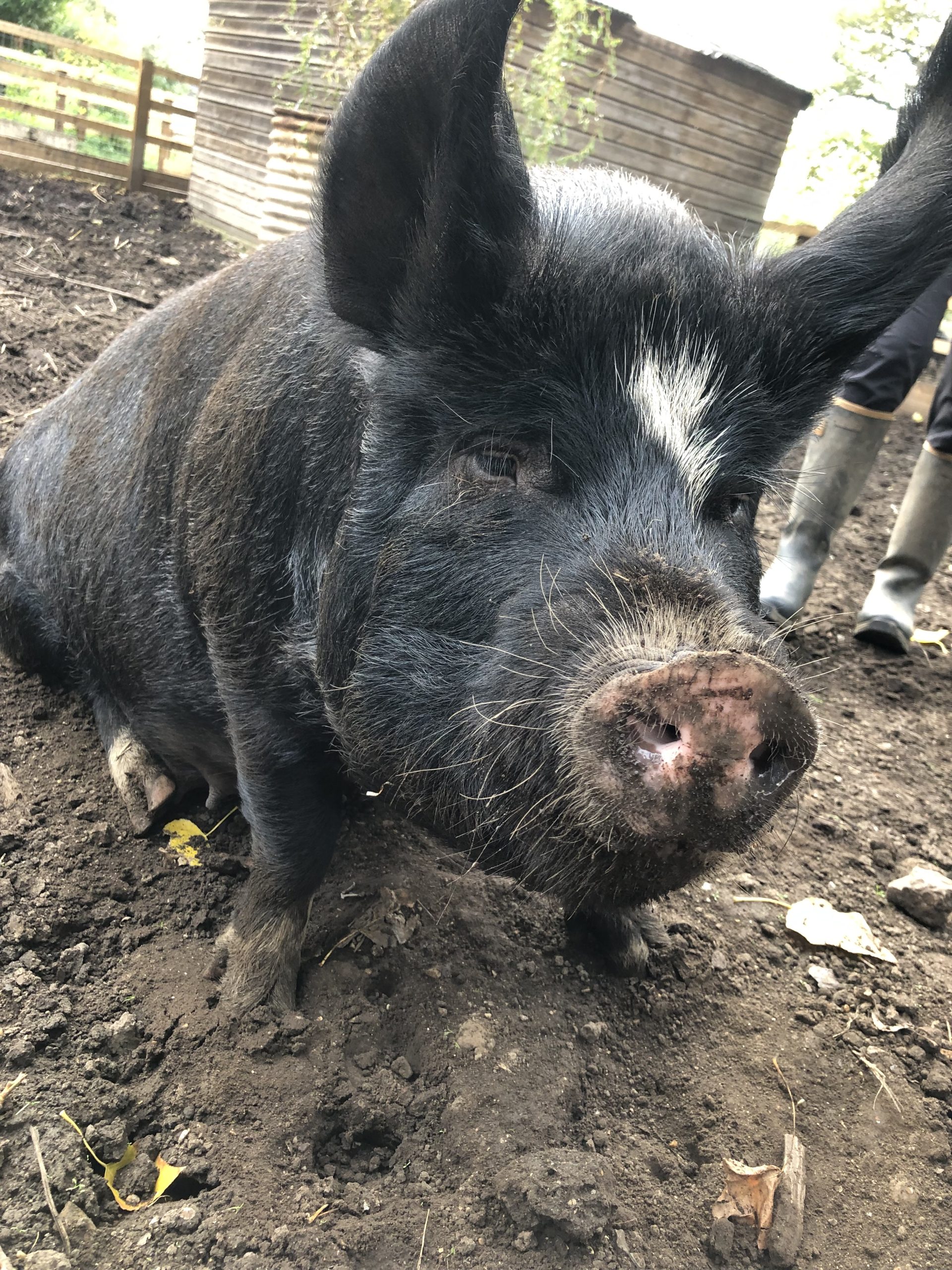
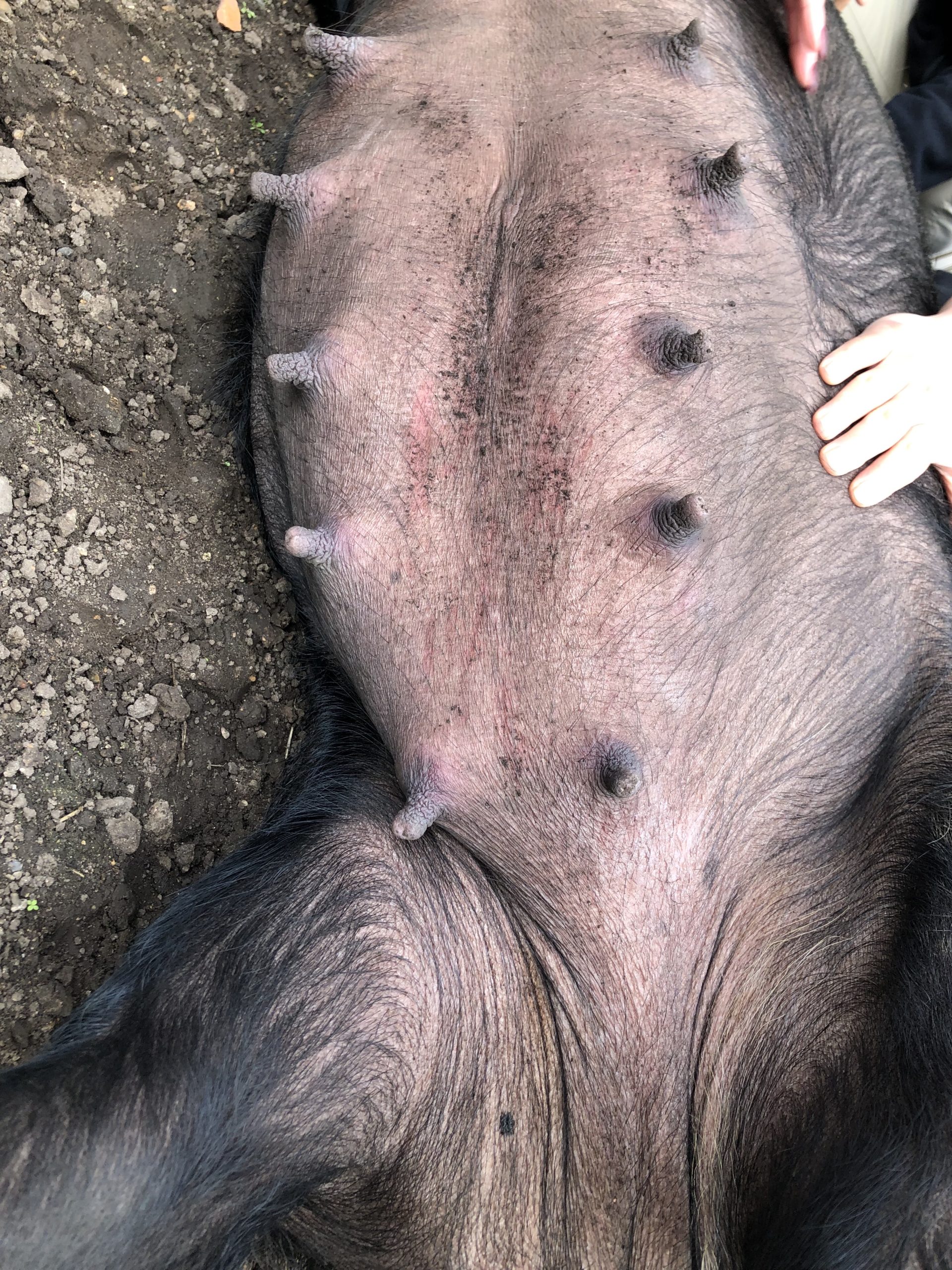
A sow is the term for a female pig who has previously had piglets, and she instinctively knows when she is close to farrowing. At that point she starts to nest. Plum always farrows in exactly the same spot inside the shed. We make sure that she has plenty of fresh straw, and she will spend the next hours arranging it exactly where and how she wants it. She will pick up a mouthful and carefully put it down in another place, building some of it into piles, again and again, until she has made her nest.
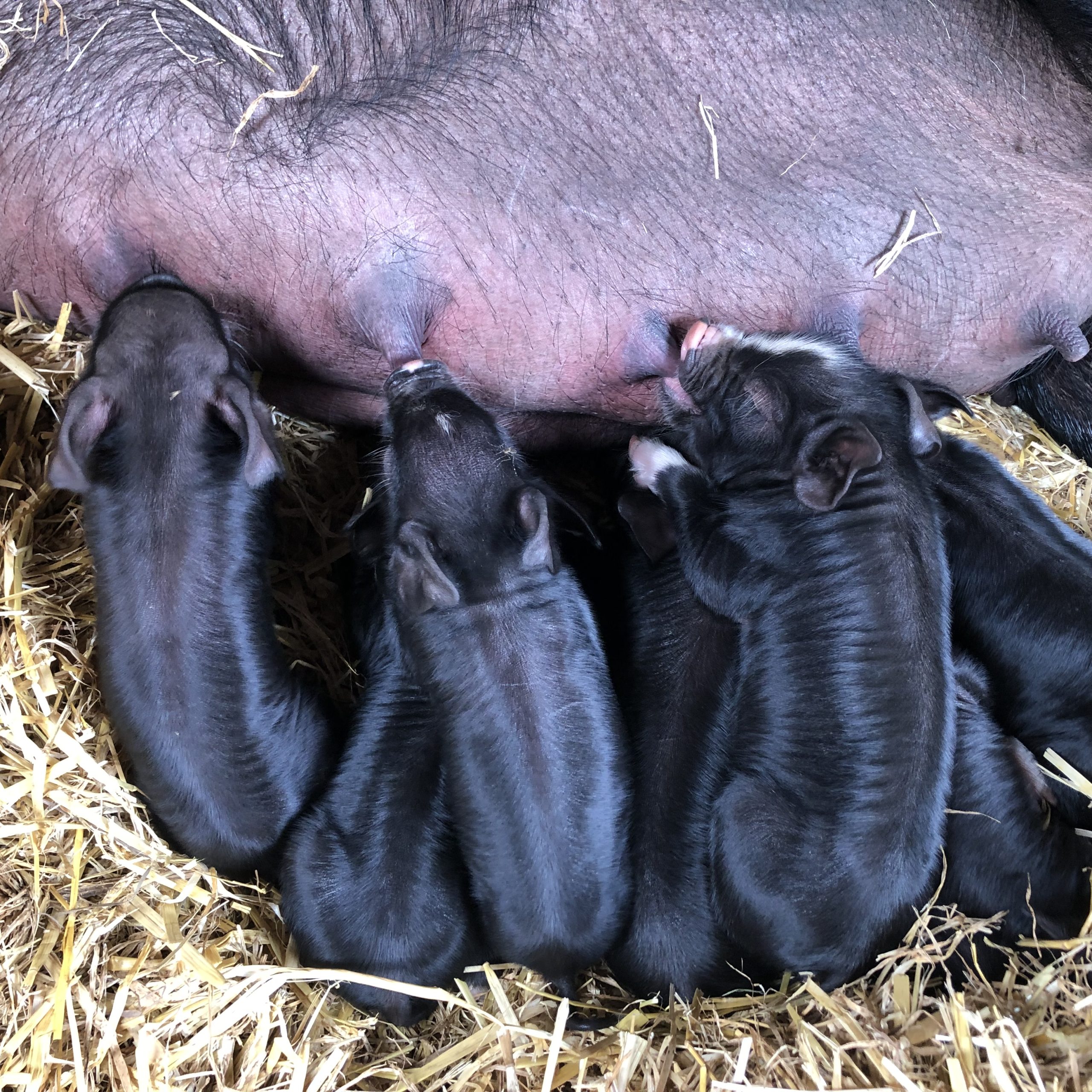
A sow is pregnant for three months, three weeks, and three days – an easy number to remember! It takes a few hours for all of the piglets in a litter to be born. Newborn piglets are immediately able to stand and make their way to a teat. There is a bit of a fight at first to get to the teats which are closest to the mother’s head, as they produce the most milk. These will of course be claimed by the firstborn and the strongest piglets, and then the other piglets will choose their teat, which they will stick with until they are weaned.
This year Plum gave birth to three healthy girls and four healthy boys. If you came to the farm when they were a few days old you will have seen them sleeping in the shed, huddled together and heaped on top of one another to feel safe, snuggled and warm; or you may have seen them clambering over one another to get to a teat whenPlum called them to suckle.
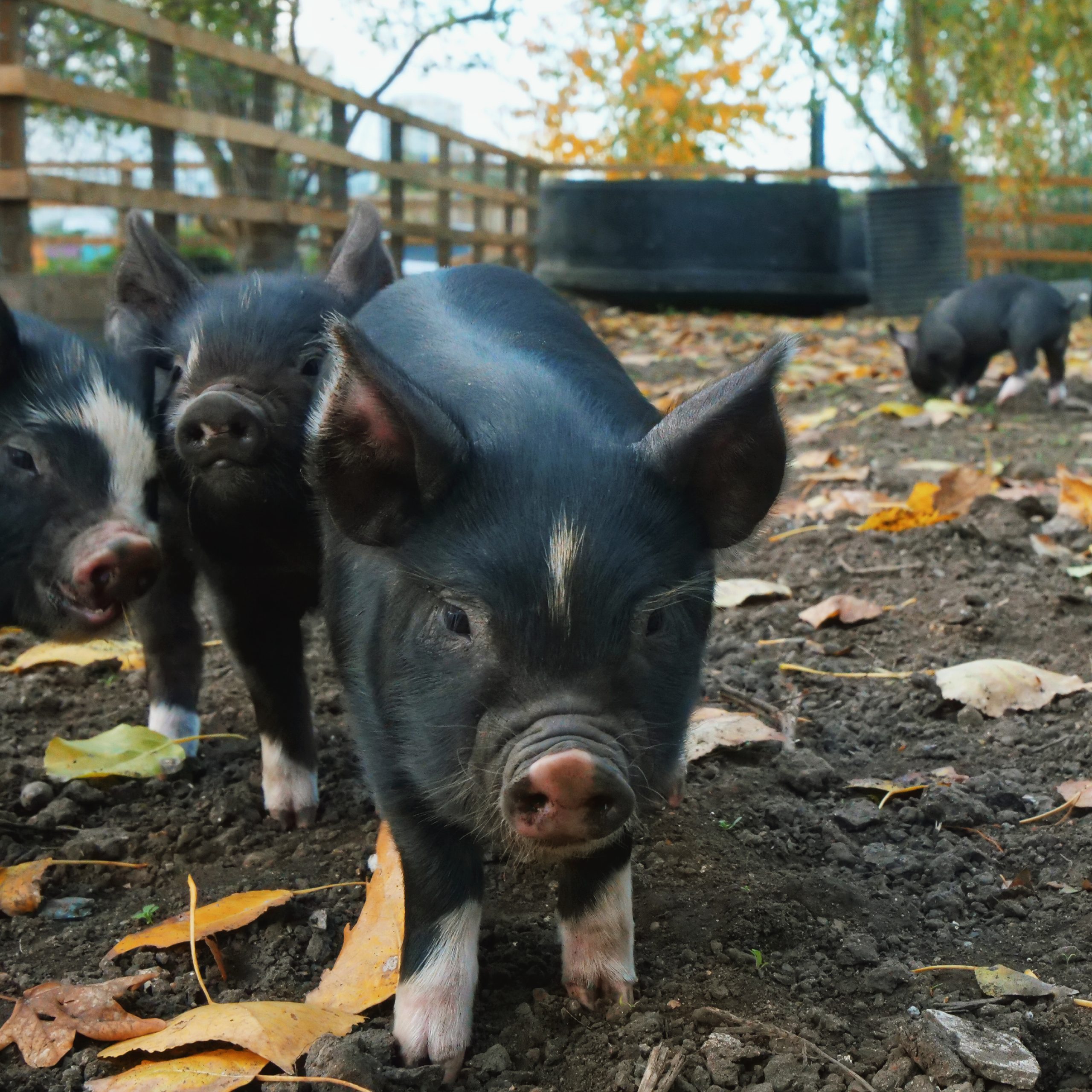
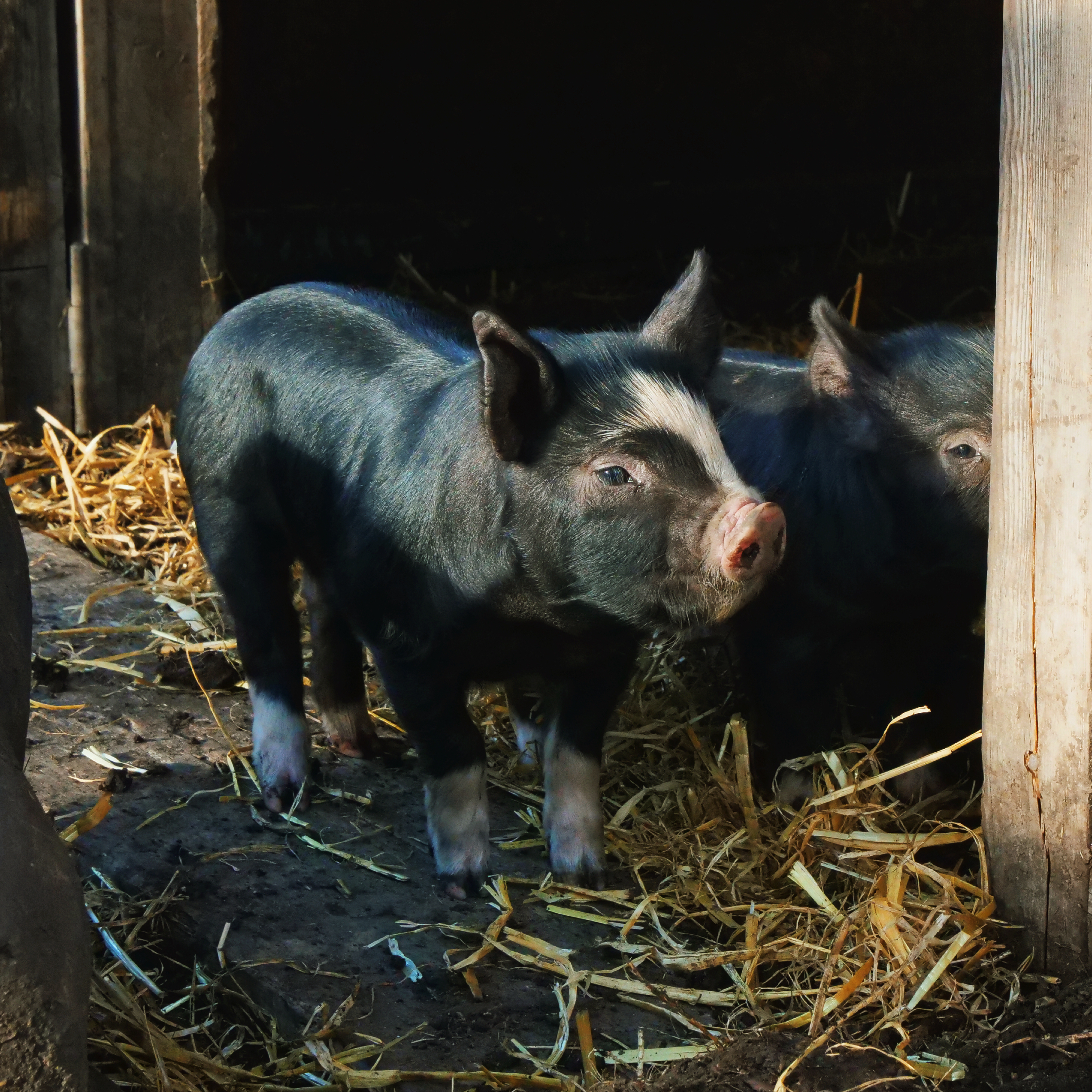
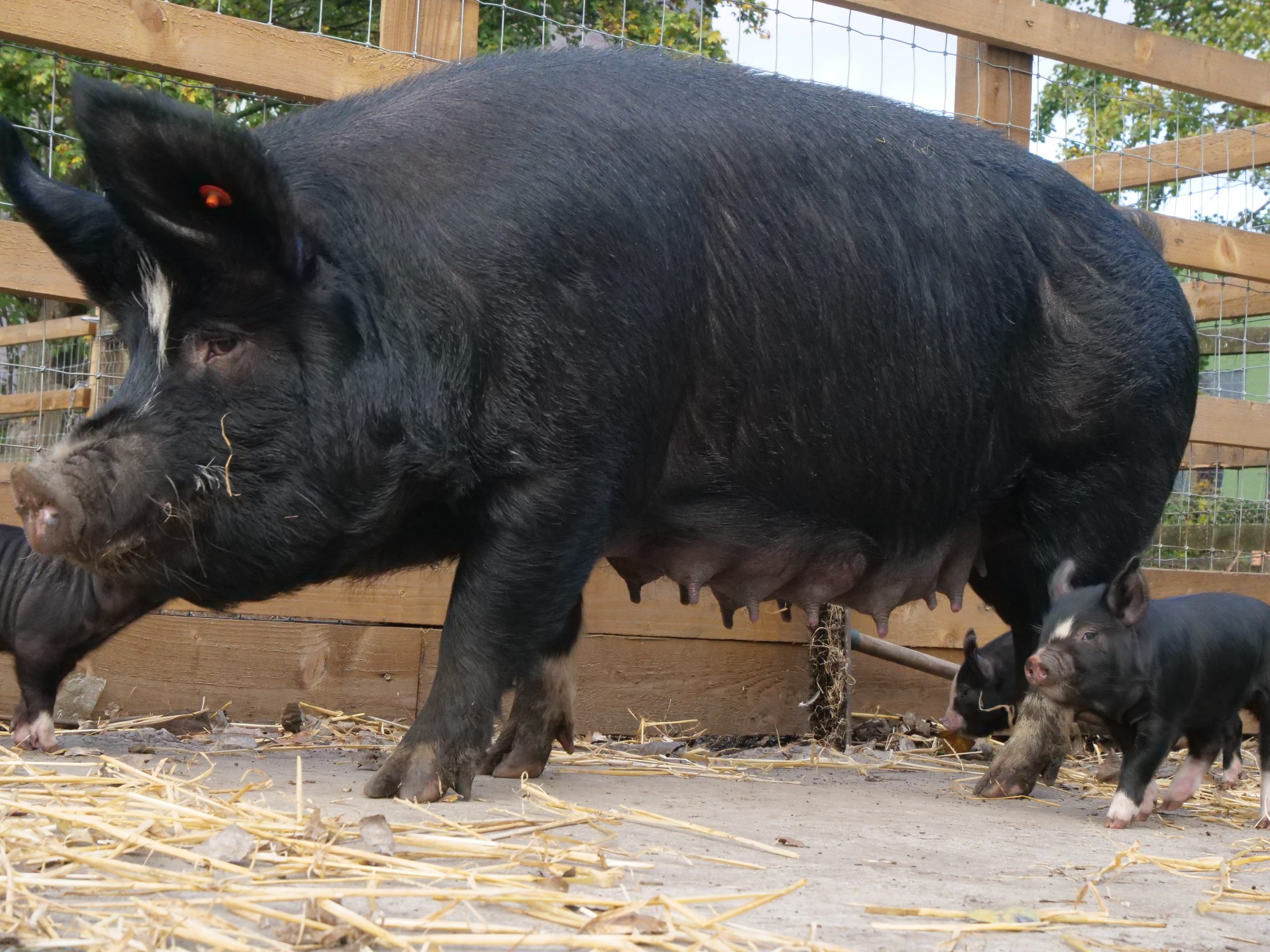
The piglets are now out in the world, happy to be exploring and running around, following their mum and learning to root the earth with their tiny snouts just like she does. They also enjoy a playful fight, as brothers and sisters do – and the girls give as good as they get, in fact the smallest of the sisters is the feistiest one!
Let us not forget that Mars is the proud father of the piglets. Plum and Mars make a perfect couple. When they were living together you may have caught them sleeping peacefully side by side, snuggled up to one another – or perhaps you heard them bickering from across the other side of the farm!
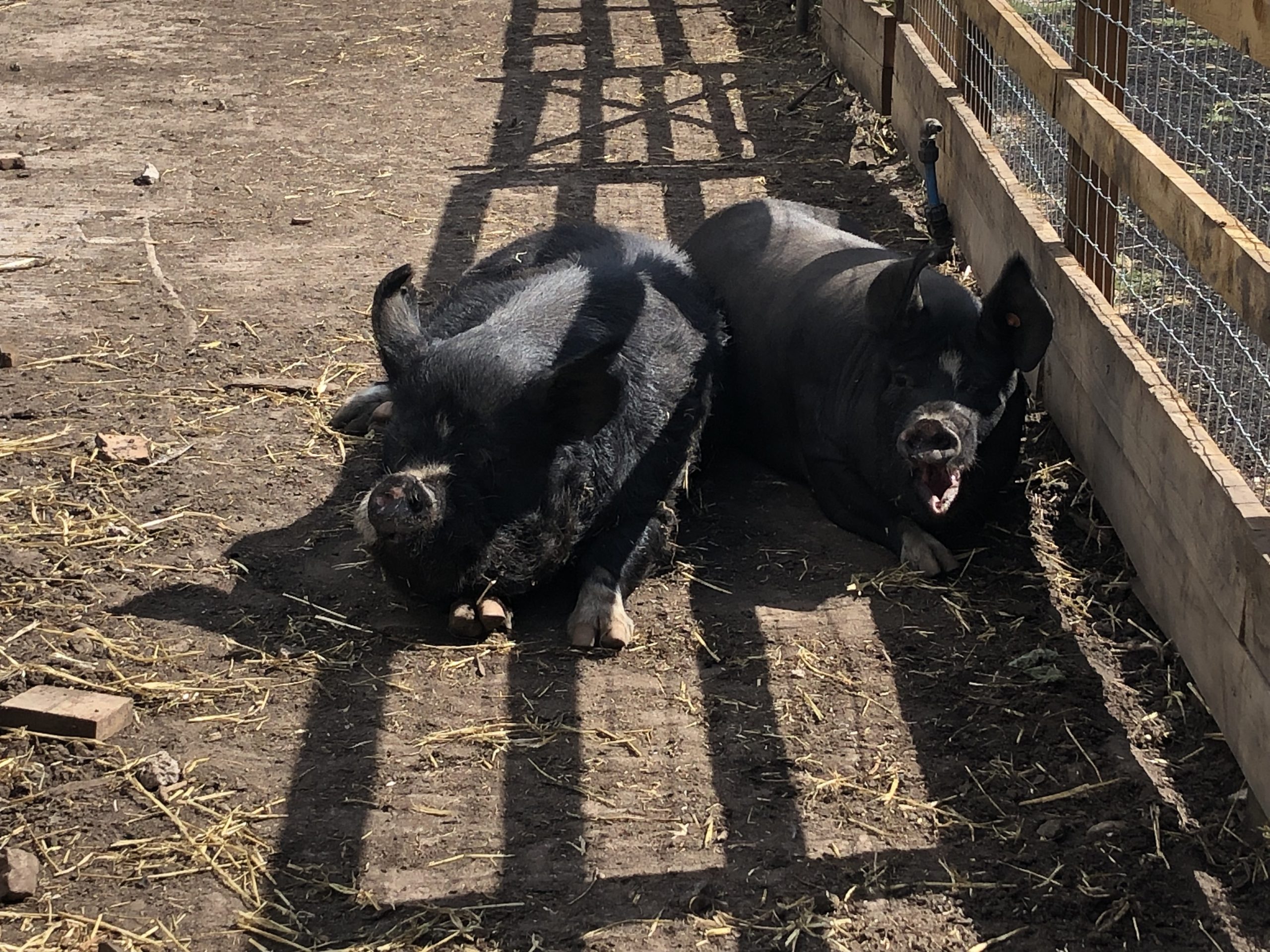
Mars, Plum and the piglets are all Berkshire pigs, a rare British breed of pig which is currently on the endangered list of the Rare Breeds Survival Trust (see below).
The Berkshire breed has a long rich history. It is the oldest recorded British breed of pig, and can be dated back as far back as the 17th Century. The breed originates from an area of the country which was at the time part of Berkshire, but is now within Oxfordshire. Originally the Berkshire pig was a golden sandy colour, with black blotches. It was popular in Britain during the 19th Century, when it was developed and eventually became the pig which we see today – predominantly black, with white splashes on its snout, trotters and tail. The facial markings vary between pigs, which helps when you’re trying to identify new piglets!.
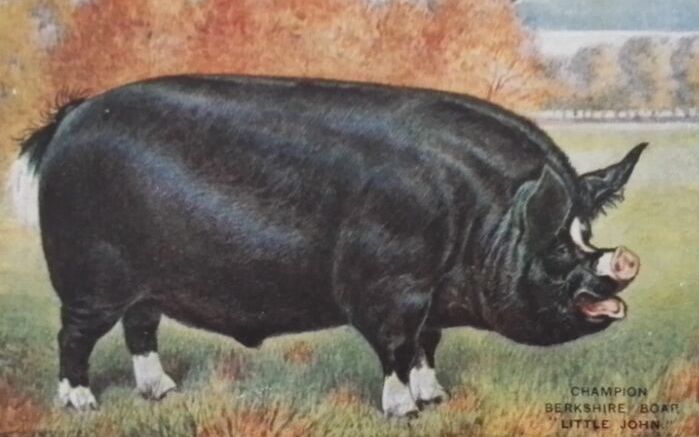
Berkshire pigs have a docile temperament, and the sows are known to be excellent mothers. True to her breed, and thanks to the special qualities she possesses, Plum is a wonderful mother. She is attentive to her little ones, and also welcomes our support, letting us regularly check that her piglets are well. She is always generous when it comes to allowing us to spend time with her little ones.And she doesn’t panic when we have to spray a little antiseptic onto the cuts they inevitably get from fighting!
Plum and Mars are much loved by all the staff and volunteers on the farm, and no doubt by many of our visitors too. We are very lucky to have two such special pigs, who are full of warmth and openness towards anyone who spends time with them. It is indeed no surprise that they produce such beautiful offspring. Stepney City Farm is proud to play its part in helping to conserve and secure a future for this rare and endangered British breed of pig, which is an important part of our heritage and a treasured breed of pig.
And finally, did you know….?
- Pigs have been identified to have twenty different sounds which they use to communicate with one another.
- It is thought that the way piglets sleep all huddled and snuggled on top of one another could be the origin of the phrase higgledy-piggledy.
- By the time they are two weeks old, piglets can recognise their own name when their mother calls them.
- The amount of milk which is released through each teat of a sow varies and it is believed that the sow has some control over this, so that she can give more nourishment to those piglets who are more in need.
- Pigs wag their tails when they’re happy, just like a dog.
- Milk production and suckling in pigs is quite a complicated process. The sow will rhythmically grunt in the lead up to releasing her milk. Her piglets recognise this call and make their way to her teats. The piglets vigorously nudge the teats with their snouts, eager to drink, and this stimulates the release of a hormone (oxytocin) which in turn triggers the release of milk.
- Today the Berkshire breed is more widespread in North America, where it has been selectively bred over the years to make it more commercial. Many of today’s modern commercial pig breeds were in fact developed from breeds such as the Berkshire.
- Berkshire pigs came to be known as the Lady’s Pig, as many of their well-known breeders have been female. Famous breeders include Queen Victoria, the late Queen Elizabeth II, and the writer Beatrix Potter.
If you would like to find out more about the Berkshire breed you can visit the websites below:
https://www.rbst.org.uk/berkshire
https://www.berkshirepigs.org.uk/the-club/history-of-berkshire-pigs