

When is a Polish Chicken not a Polish chicken? When it’s a Dutch chicken! All will be explained below by Emily, our new Farmyard Manager, who introduces our newest and funkiest breed of chicken to the Farm.
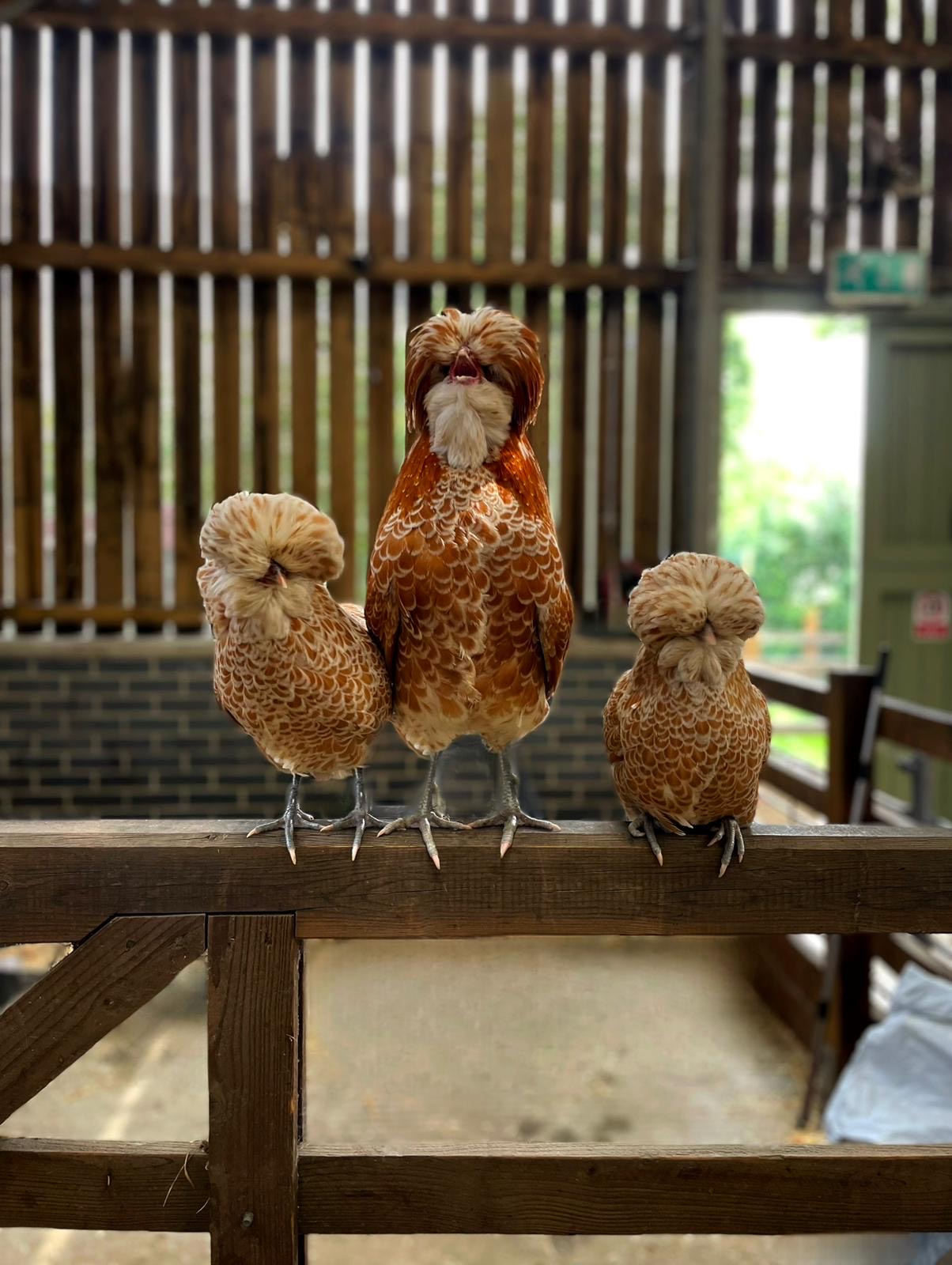
Chickens come in all kinds of weird and wonderful shapes, sizes and colours. But one of the most distinctive breeds of chicken are the new trio that have come to live with us on the Farm.
This new trio of two girls and a boy are a breed called Polish chickens, but before we tell you all about this wonderful breed, let’s introduce them. There was a bit of a struggle with names, but eventually it was decided on naming them Articuno, Zapdos and Moltres, after the legendary bird Pokémon.
The male, Articuno, has been nicknamed Arti for short and he can be easily told apart from the girls. But the two girls, Zapdos and Moltres, who have been nicknamed Zap and Tris for short, are pretty identical. The best way to tell them apart is their leg rings, where Moltres has the pink one and Zapdos has the purple one. However, if you come to interact with them, it becomes immediately obvious which one is which. Tris is super friendly and confident and will jump into your arms for a cuddle and treats. Zap is a bit more reserved, but very talkative!
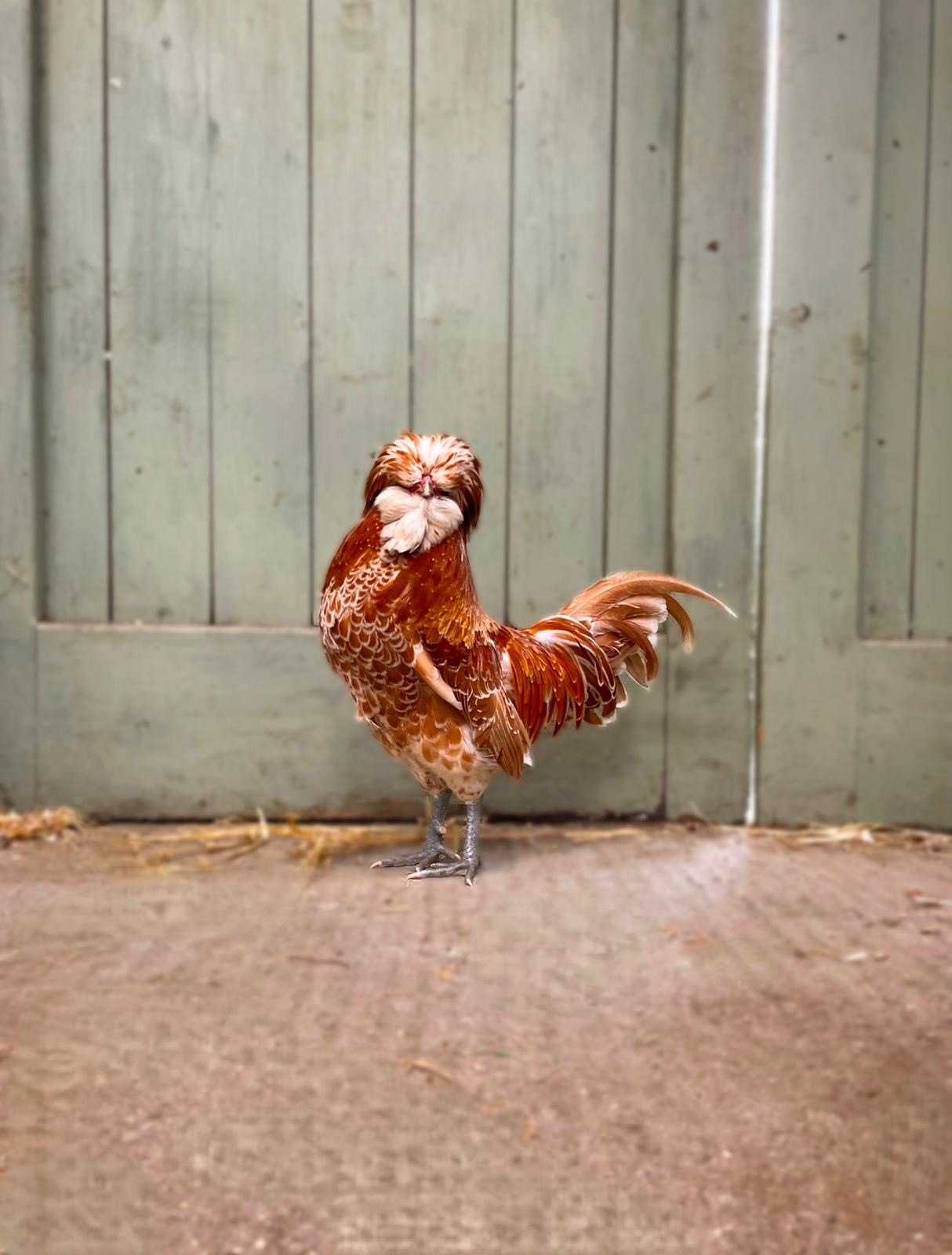
Polish chickens have a very misleading name because they aren’t actually from Poland! The exact origin of the breed isn’t known for sure, but the best current theory is that they were bred from other ‘crested’ breeds from Asia and then brought to the Netherlands, who then named them Polish because of the feathered helmets that the Polish soldiers wore. The Dutch are credited with actually developing the breed into what it is today during the 16th and 17th centuries.
The Polish chickens that we now have are specifically Chamois Polish. Chamois refers to their beautiful creamy-orange coloured feathers, and is also sometimes known as Buff Laced. Polish chickens can come in many different colours, including Blue, White and Silver Laced.

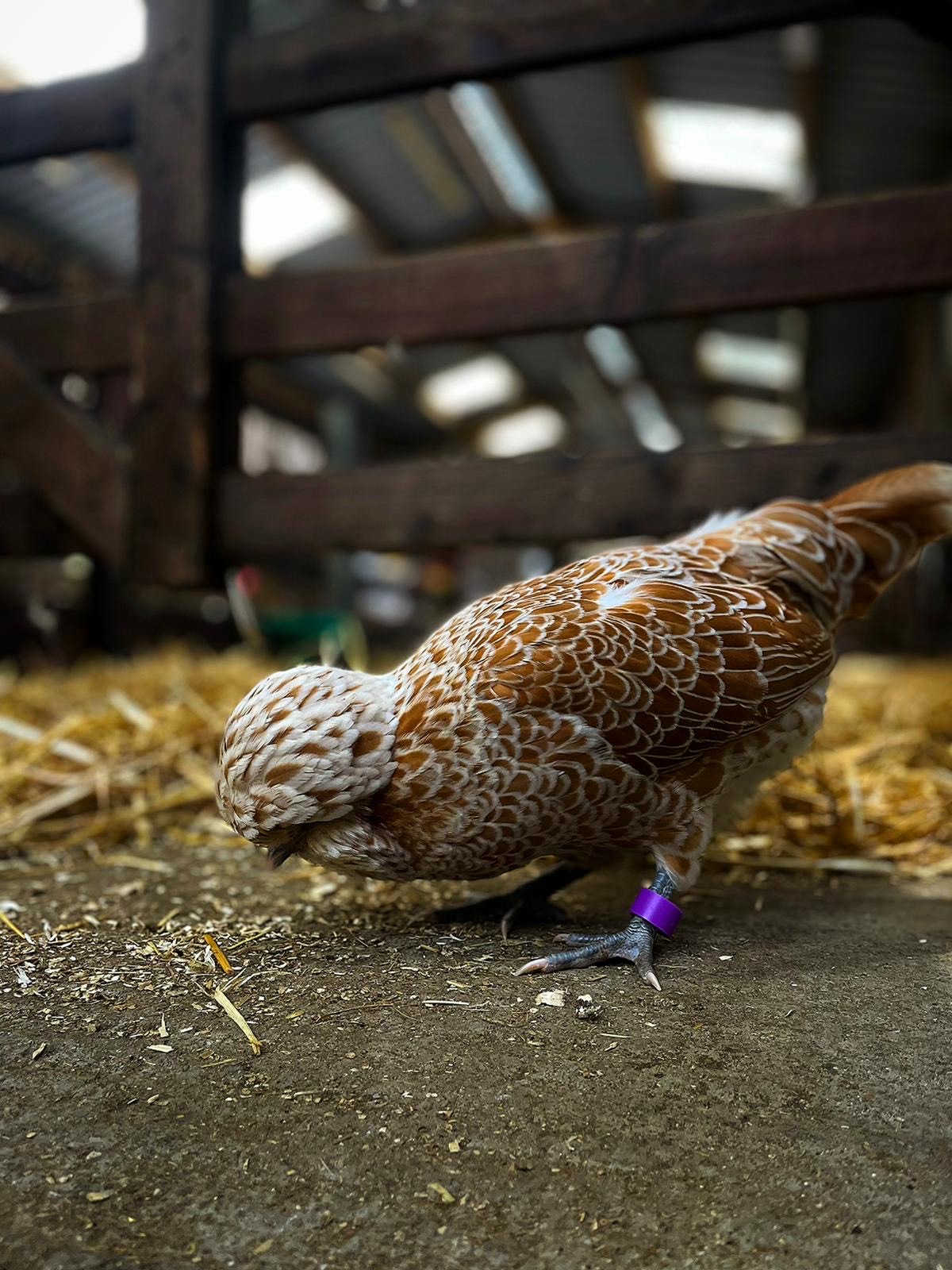
Polish chickens aren’t particularly well known for being good egg-layers, so the entire purpose of this breed is to be pets or show animals and they’re very good at it! Known for being friendly, gentle and good with children, the only downside to this lovely breed is that due to their head of feathers, their eyesight isn’t always the best and they can startle easily because of that.
Our three have to stay indoors for quarantine for at least four weeks just to make sure they don’t have anything they can pass onto our existing flock of chickens. But once they’ve finished that, they will be going outside into the existing coops with all our other chickens. So, visitors will be able to come and see for themselves their funky hairdos and fun personalities.