


Did you know that biodiversity is one of our priorities at Stepney City Farm? Wild areas and a great mix of plants and insects help to create a healthy growing environment, and we do as much as possible to help these to flourish on the Farm. We only use alternatives to pesticides and artificial fertilisers, and have maintained plenty of natural areas around the food growing sites to encourage bees and other insects. Over the past year, we have been excited to introduce two exciting new habitats to the site: a large wildlife pond, and a wildflower meadow.
We invited friend of the Farm and local ecologist Gino Brignoli to check out how we’re doing…
“On 9 July 2021 I had an immensely enjoyable afternoon of scrabbling about some of the newly-created habitats at Stepney City Farm in search of insects.
“I started my survey at the newly dug pond on land that has recently been returned to the Farm by CrossRail. This pond is an excellent size (perhaps 3-to-4 times as big as the existing pond). Although the pond plants have yet to become fully established, there were already an interesting array of insects to be found here. Emperor dragonflies (Anax imperator) zipped across the pond with a harsh crackle of their wings as they arced over my head in search of aerial prey; and Common Blue Damselflies (Enallagma cyathigerum) elegantly dipped and danced along the muddy shallows. A couple of powdery blue male Broad-bodied Chasers (Libellula depressa) eagerly pursued the golden flash of a female in the most impressive of aerobatic displays.

“Skittering on the water’s surface were pond skaters (Gerridae) and just beneath the water film water boatmen and backswimmers (Corixidae and Notonectidae) sculled with deep strokes of their oar-like legs. This will be a fabulous place for pond-dipping when it opens to the public. The very distinctively coloured lurid green sawfly (one of the Rhogogaster species) was found in the vegetation alongside the pond and on a nearby rock, the Field Damsel Bug (Nabis ferrus).
“A south-facing sandy bank running along the fence at the far end of the pond is perfect for species of digger wasps, solitary bees and ground bugs. Exposed ground is a valuable insect habitat and this one did not disappoint. A number of Diodontus wasps were nesting in the ground, emerging in search of prey for their larders and the enormous-eyed digger wasp Astata boops was spotted hunting shieldbug nymphs nearby while the grassy margins seemed to sing and swarm with grasshoppers.
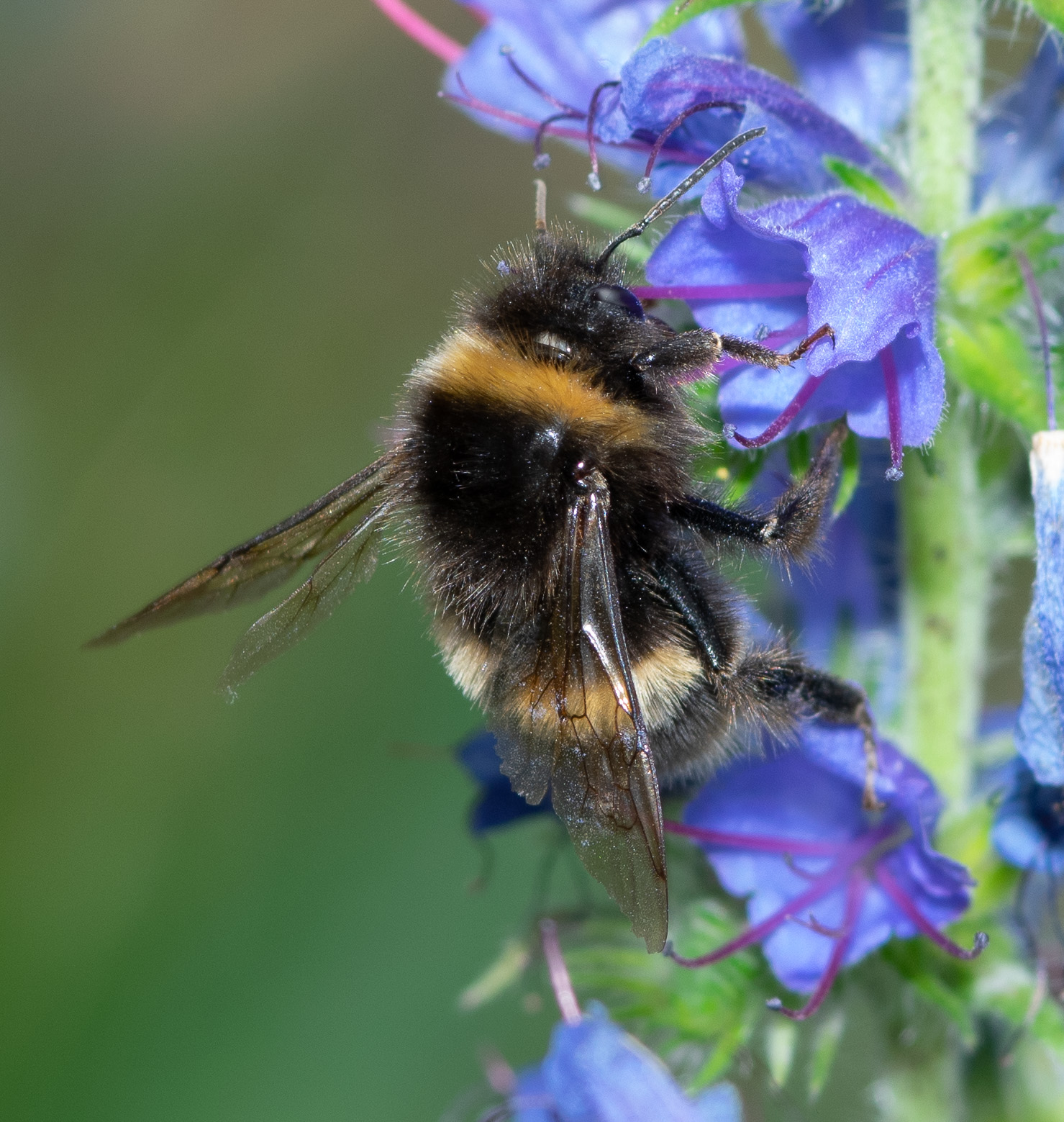
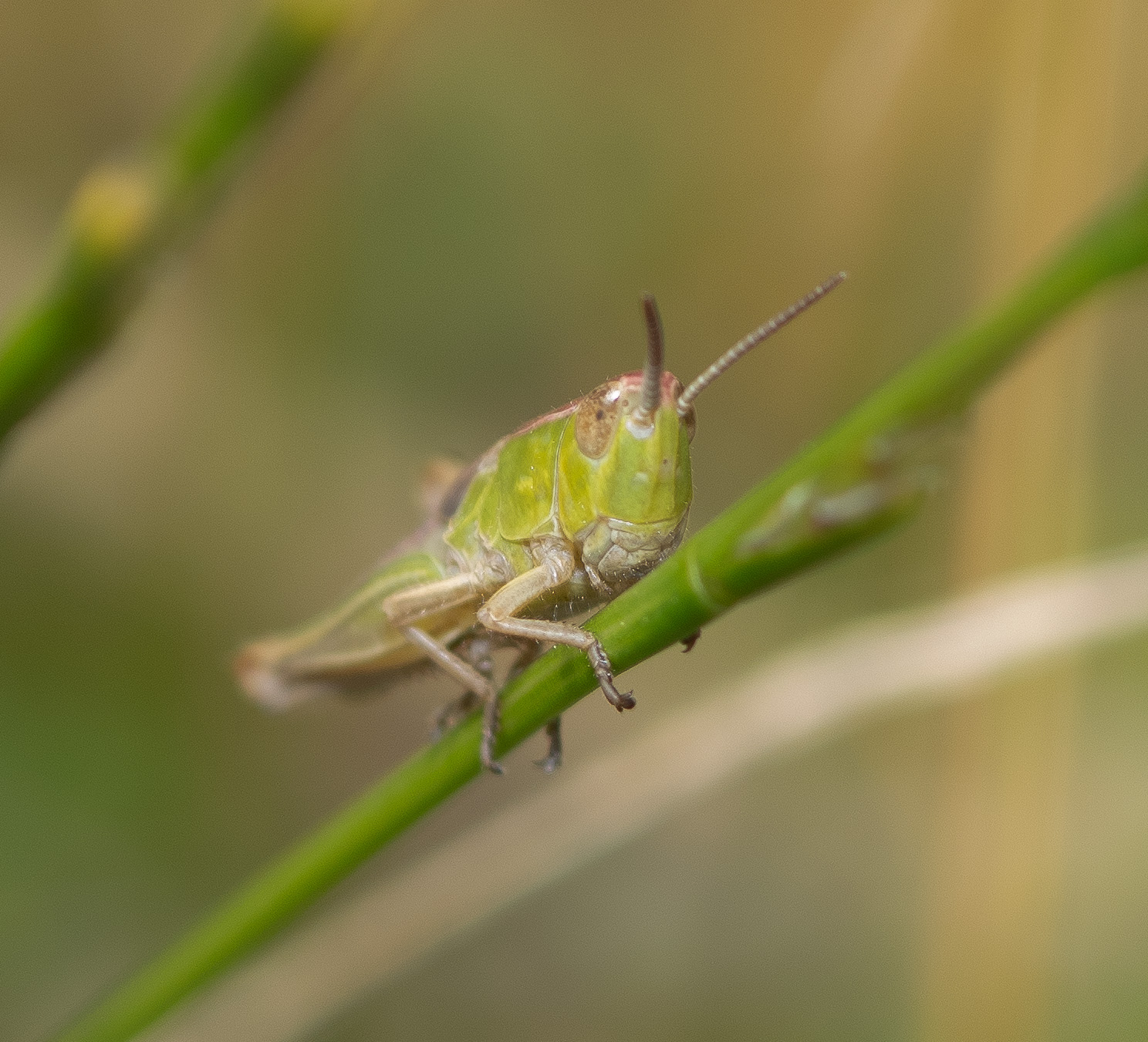
“Another exceptional behind-the-scenes habitat is the now well-established wildflower meadow that was planted alongside the kitchen gardens last year. Filled with a variety of wildflowers in bloom, this area was buzzing with pollinators including bees, flies and wasps. The bees recorded were: Buff-tailed bumblebees (Bombus terrestris), Wool-carder bees (Anthidium manicatum), Mining bees (Andrena) and Yellow-faced bees (Hylaeus) alongside the wasps: Common Spiny Digger Wasp (Oxybelus uniglumis), and the tiny metallic green wasps (Pteromalinae and Torymidae). Some wonderful wasp mimic hoverflies were found, including Xanthogramma pedissequum, the Batman Hoverfly (Myathropa florea), and the Marmalade fly (Episyrphus balteatus) among others. The metallic green and very hairy-eyed soldierfly, the Broad Centurion (Chloromyia formosa), was also abundant on flowerheads.
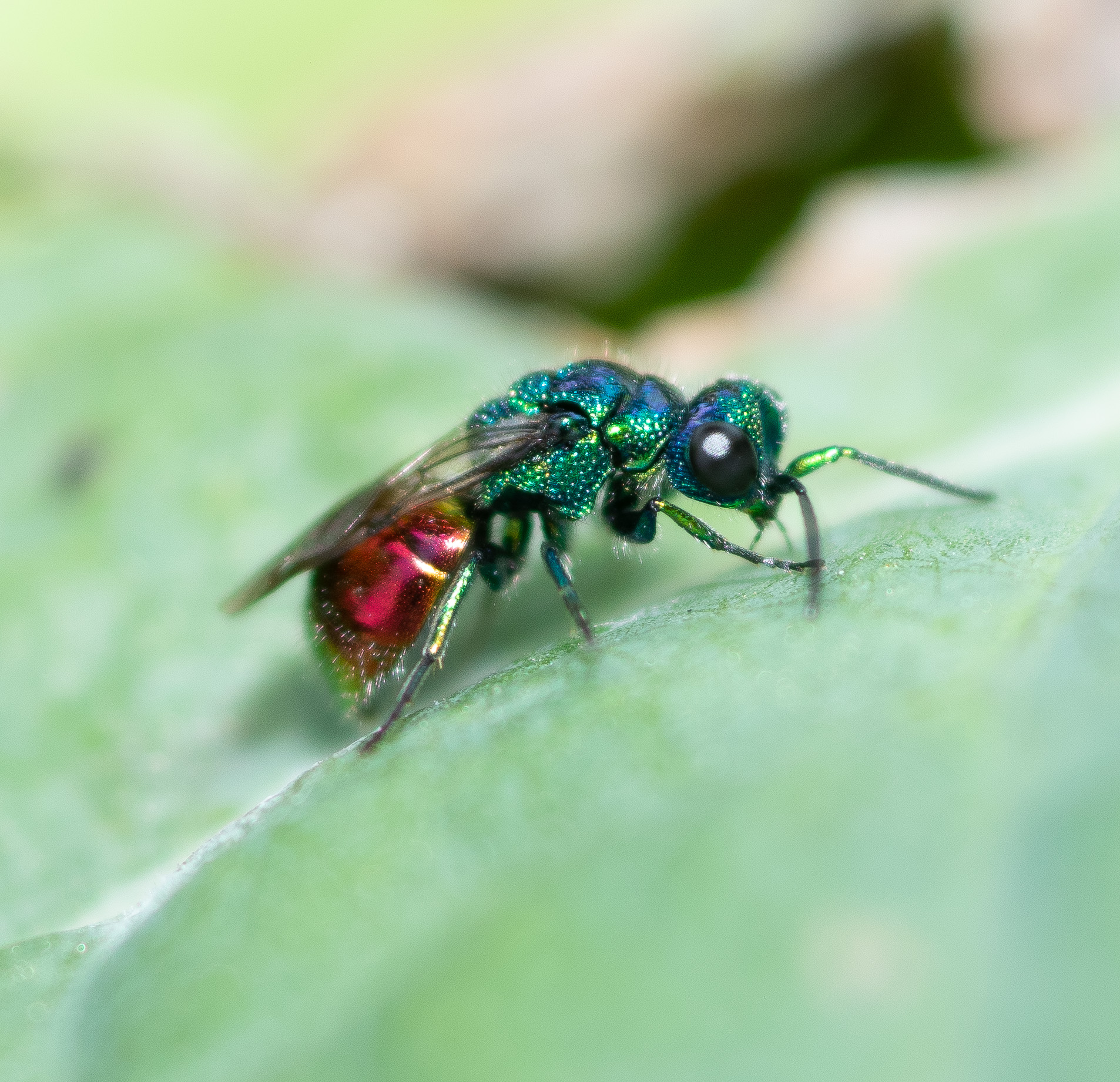
“A personal highlight was finding the rubytail wasp (Pseudomalus auratus). Wasps in this family are also known as jewel wasps or cuckoo wasps. They are gorgeous iridescent wasps that parasitize other wasp species.
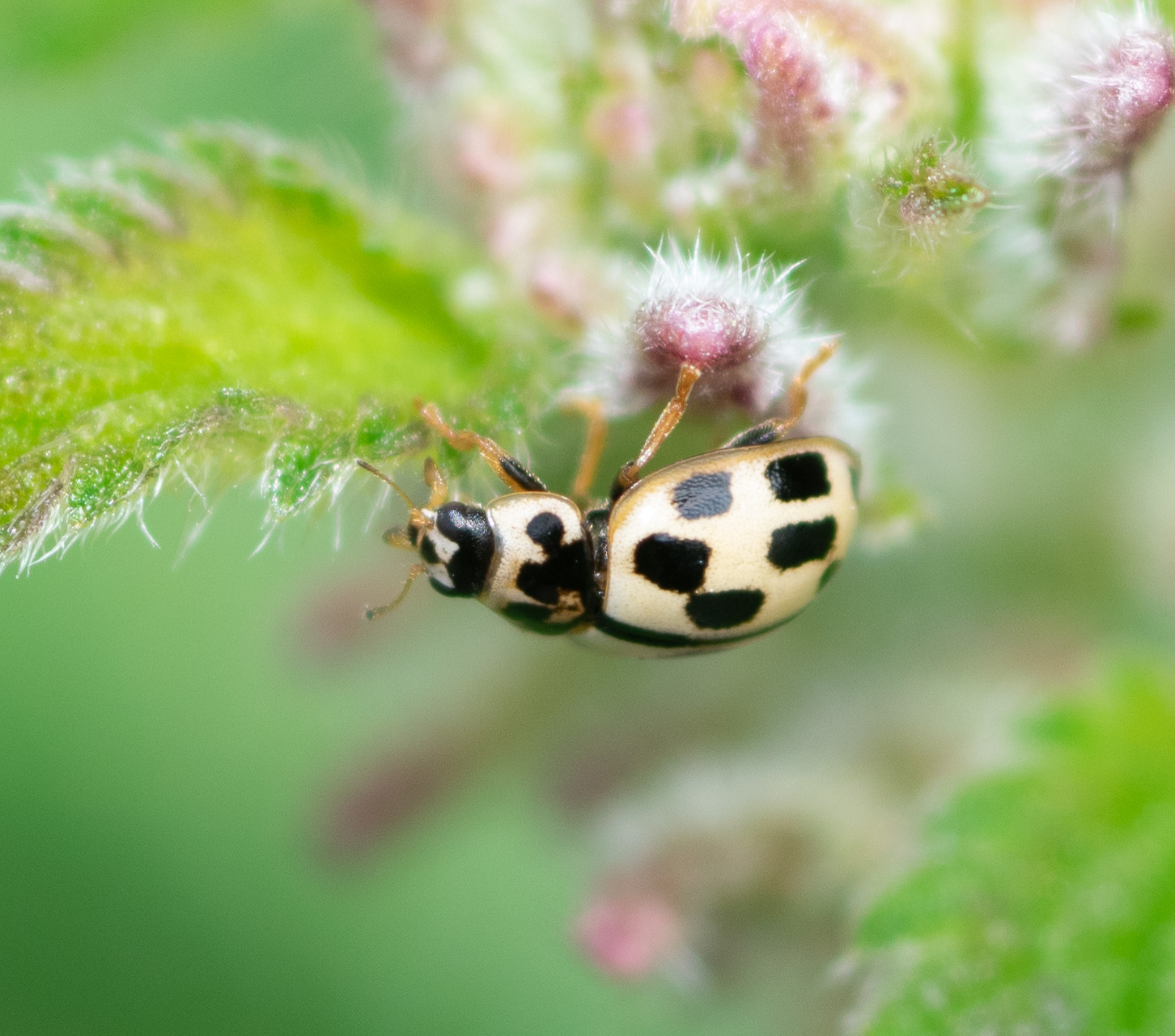
“Ladybirds were to be found everywhere in surprisingly vast numbers, especially hundreds of Adonis Ladybirds (Hippodamia variegata) and good numbers of Harlequin Ladybirds (Harmonia axyridis). There were also Seven-spot, (Coccinella septempunctata), Two-spot (Adalia bipunctata) and Fourteen-spot ladybirds (Propylea quattuordecipunctata) recorded.
“Finally, to top off a great day out with the often-overlooked and highly charismatic wildlife that surrounds us, it also turned out to be flying ant day. I certainly couldn’t have planned that any better. Stepney City Farm has a wonderful mix of microhabitats for a vast range of insect species and I’m very excited about having the opportunity to come back to do a more rigorous and extensive insect survey in the future.”
We can’t wait to see what else is living on the Farm! For more of Gino’s beautiful pictures keep an eye on our Instagram.