
Skippy, one of our livestock workers, introduces the new sheep we have on the Farm. The Exmoor Horns have travelled a long way to be with us – from Exmoor in Devon, unsurprisingly!
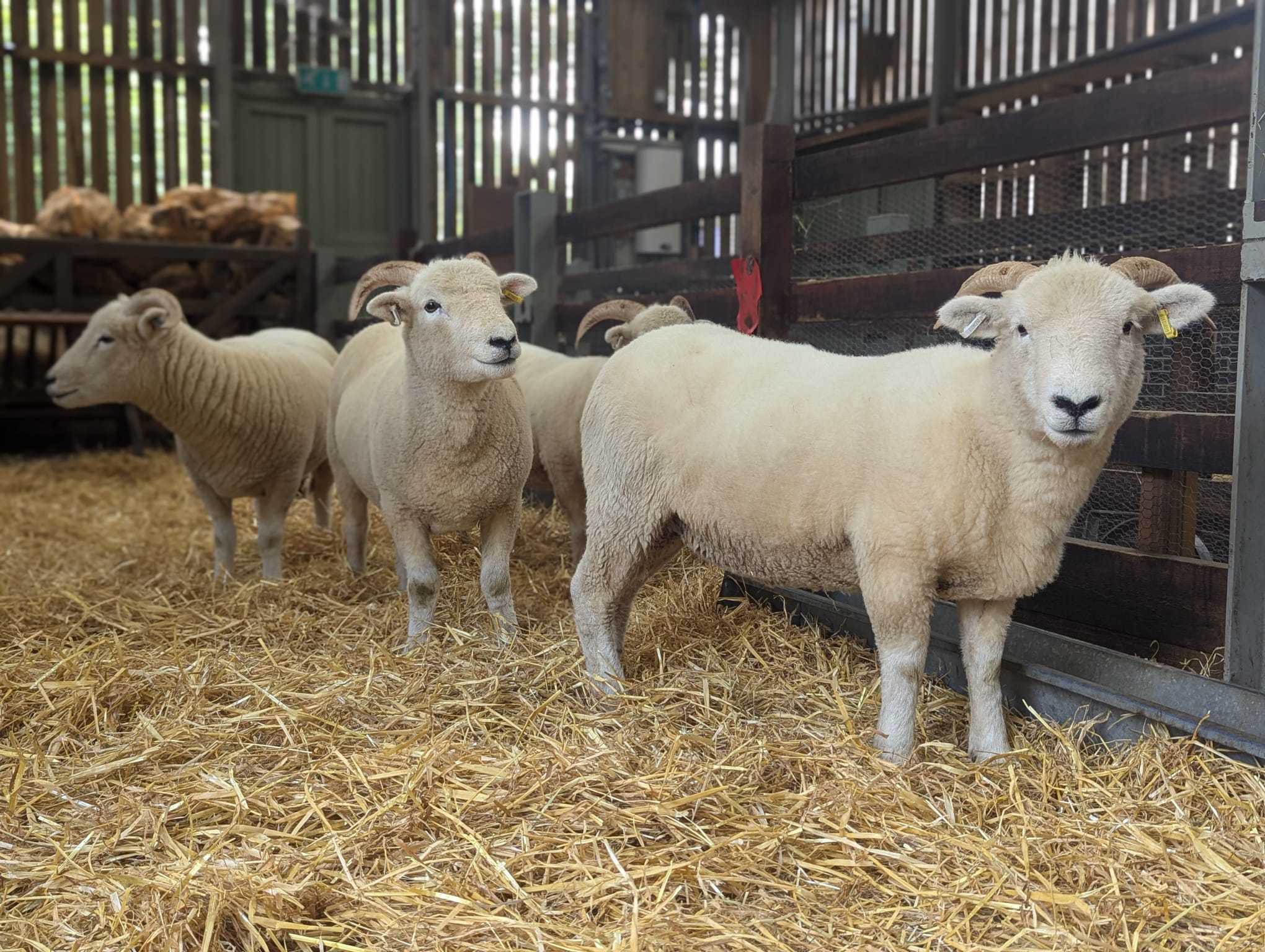
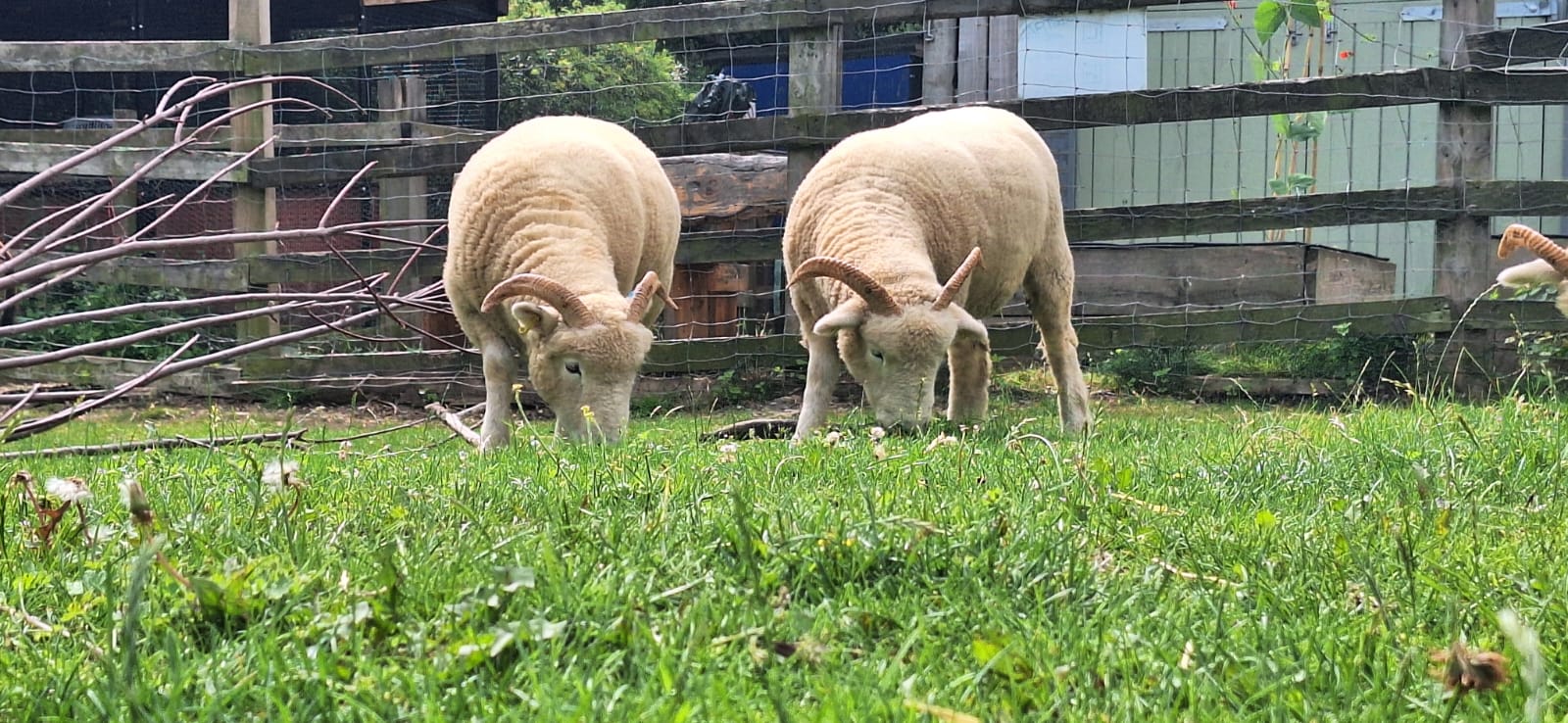
“Those of you who have visited the Farm in recent days will have noticed that we have five beautiful new sheep grazing in our fields. Say hello to Hugo the ram, and our four ewes: Truffle, Custard, Marshmallow and Cream-Puff, chosen by Farmer Aimee to be our new breeding flock.
Hugo was named before he came to us, but the girls arrived here without names. So Farmyard Manager Aimee suggested naming them after sweet treats. Our CEO Clare said she loved the idea – as long as one of them could be called Cream Puff! So Cream Puff it is. Cream (or Puff?) for short.
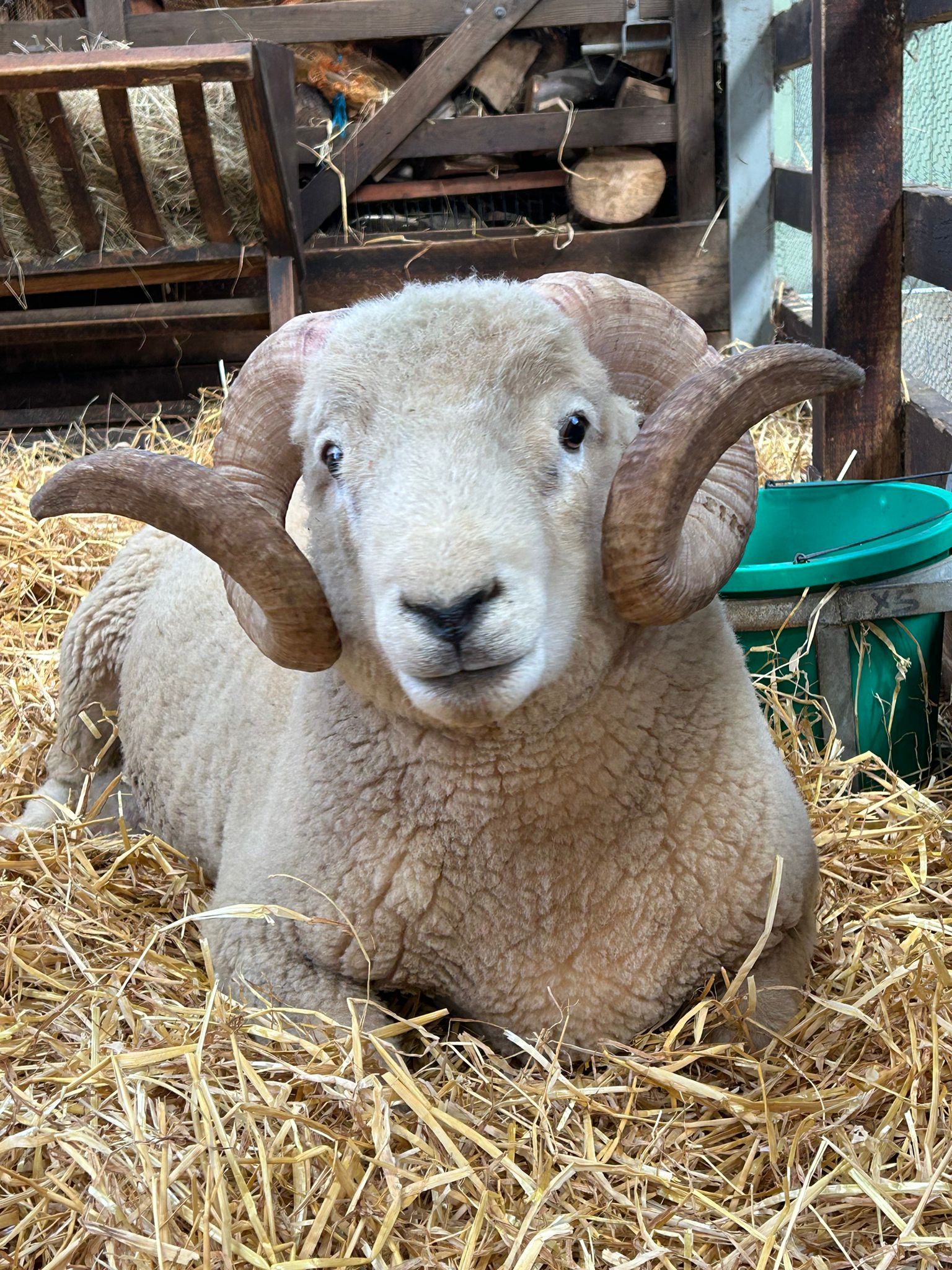
The sheep are all Exmoor Horns, a native British breed of sheep, new to Stepney City Farm. They came to us from two separate farms in Dulverton, Devon, where they lived in a rural setting.
Exmoor Horn sheep have a long and rich history. They are indigenous to Exmoor, having made their home on the moors of Exmoor for thousands of years. The remains of similar sheep found on the moors have been traced back to Roman times.
The sheep we see today are descended from these ancient sheep. The breed was developed at the beginning of the nineteenth century, and in 1906 the Exmoor Horn Sheep Breeders’ Society was formed.
You may have noticed that the sheep all have markings on their horns. Some time after the breed society was formed, it was decided that all horns of Exmoor Horn sheep must be branded. The branding records the flocks, and the ownerships of each flock, which ensures that the purity of the breed is maintained and protected.
The left horn is branded with the farmer’s flock number, and an anchor which symbolises Exmoor (the anchor is similarly used for Exmoor ponies) The right horn is branded with a single digit to show the year of birth (using an X is for zero).
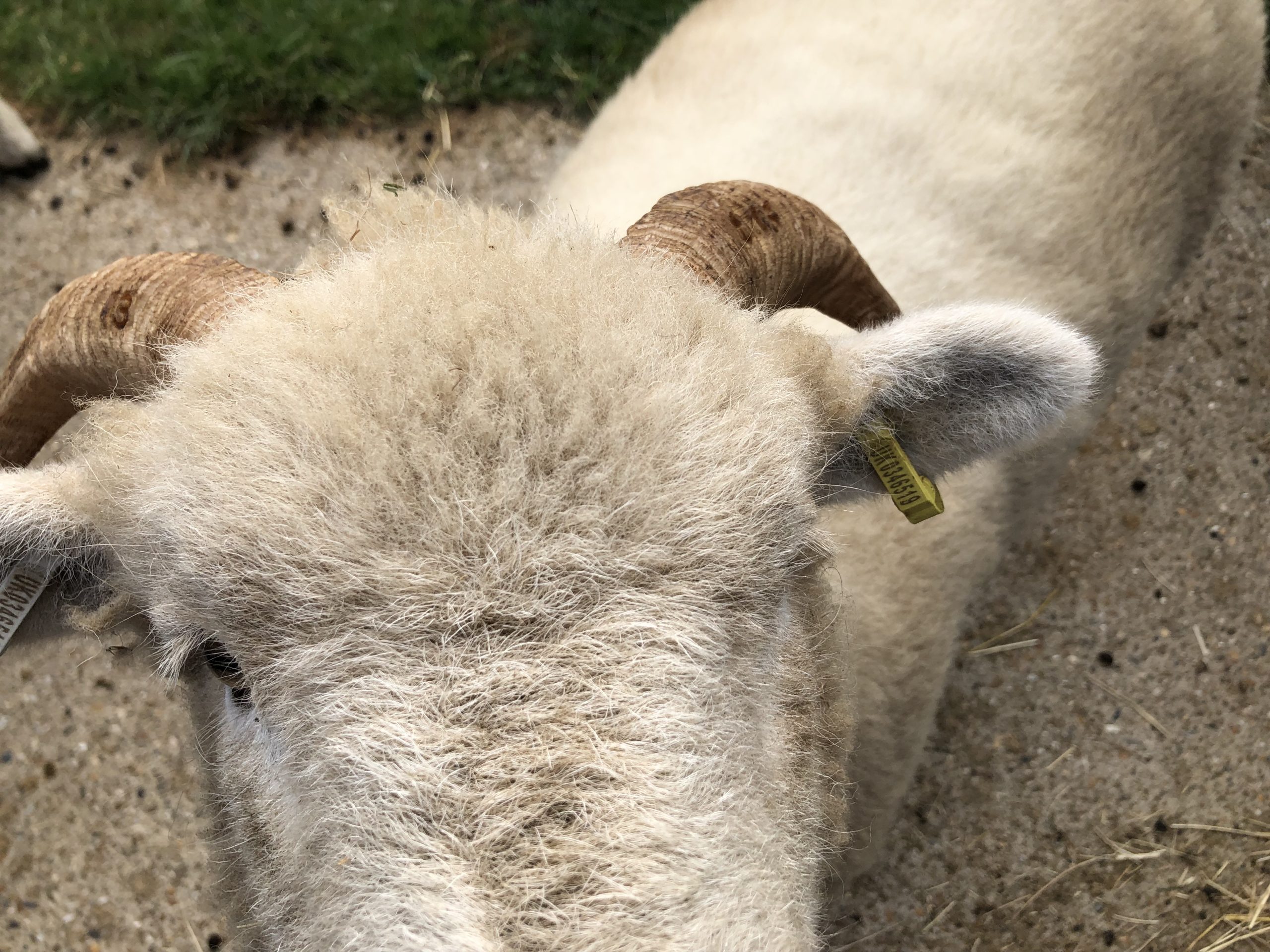
So the next time a sheep comes up to greet you at the fence, see if you can read the branding. Our sheep all have the number 3 branded on their right horn because they were born last year, the number three being the last digit of 2023. This means that all our sheep are what is known as a shearling. Shearlings are all approximately one year old, which is the age at which a sheep is sheared for the first time. They will continue to be shearlings until they are sheared for a second time next year.*
Sadly over the years the numbers of Exmoor Horn sheep living on Exmoor have seen a gradual decline. As other more commercial breeds are increasingly farmed on the moors these new breeds have grown in number, and so today only a small percentage of sheep found on Exmoor are native Exmoor Horn sheep.
Although the breed is not formally classified as ‘at risk’, the UK (and global) populations of Exmoor Horn sheep are very much concentrated in Devon and the South West. So we need to increase the number of flocks living outside this region, to not only grow the numbers but also to increase the genetic diversity.
Which is why we are proud that Stepney City Farm will be helping to secure the future of this native breed, a breed which is a part of our British history and heritage. We are also proud to say that we are one of very few flocks located outside the South West region, and we are the only farm within Greater London where you can see an Exmoor Horn sheep.

Hugo and the girls, they have quickly settled into their new home, and our original sheep – Whisper, Mint and Romeo – have accepted their new companions into the fold. Hugo is a calm, strong and often silent presence on the Farm, who looks very handsome sporting his thick twisted horns. The girls are pretty and very friendly. It’s likely that the first one to come up to you if you stand by the fence will be Truffle. Marshmallow is still a little bit shy. She’s growing in confidence each day, but she usually stands behind the other girls. If you spot a little tuft of fleece on top of the head, then that will be Cream (Puff!). Which leaves Custard who, if you look closely, has a slightly longer face than the other girls.
Unusually for a hill breed Exmoor Horn sheep are known for being docile and easy to handle. The ewes are good mothers and produce a plenty of milk for their lambs. Both rams and ewes are easy to look after. Thanks to the demands of their original habitat they are a hardy and robust breed, able to withstand the cold and the wet (which we had plenty of in London last Winter!).
Exmoor Horn sheep are classified as a dual purpose upland breed, which means they are equally prized for their meat and their fleece. The sheep produce high quality lamb and mutton. In fact in the 1800s the mutton from Exmoor Horn sheep was considered to be of the finest quality, and was served in the best restaurants in London. In recent times we have seen mutton fall out of favour, but there is now a growing appreciation of mutton and a campaign to encourage us all to enjoy this older meat.
Unlike many hill breeds the Exmoor Horn sheep also produces a high quality fleece. The fleece is thick and the wool is coarse and hard-wearing, perfect for making socks, jumpers, jackets and even carpets.*
We are all looking forward to getting to know and spending time with Hugo and the girls. They have already brought much joy to the farm, and we’re very excited at the prospect of meeting their lambs next year. I am sure you will all join us in saying thank you to Aimee for bringing Hugo, Truffle, Custard, Marshmallow and Cream-Puff to the farm.
- https://anchorexmoorponies.co.uk/
- The average lifespan of a sheep is 10-12 years, and they will cease to be commercially productive 5 or so years before that. Hence a single digit is all that is needed to record the year of birth for future reference
- Shearling can also refer to the wool or fleece of a shearling sheep
- https://exmoorhornwool.co.uk/the-sheep/
If you would like to find out more about Exmoor Horn sheep check out the links below:
https://exmoorhornbreeders.co.uk/