

Skippy, one of our livestock workers, has delved into the world of donkeys this month. George and Dunstan, our beautiful donkeys have been on the Farm for, well, donkey’s years! So we thought it was time we shared a little bit of their world with you…

If you have ever visited Stepney City Farm during the last twenty four years (or its predecessor Stepping Stones Farm) you will surely have fallen in love with our two lovable donkeys, George and Dunstan. They came to the farm from The Donkey Sanctuary when they were just two years old – and in May this year they celebrated their 26th birthday!
Dunstan is named after the historic St. Dunstan and All Saints Church, which looks out over the Farm. The church was built in the 15th century, but the site has been a place of worship for over 1,000 years. George takes his name from the church St. George-in-the-East. Both churches support the donkeys named in their honour, and give a small donation to the farm each year to help with their care.
Over the years George and Dunstan have become ‘donkey celebrities’ in Stepney, taking part in church celebrations at St. Dunstan’s church. They are also the star attractions every December when they take centre stage in the Salvation Army’s Nativity Play, which takes place on the Farm.
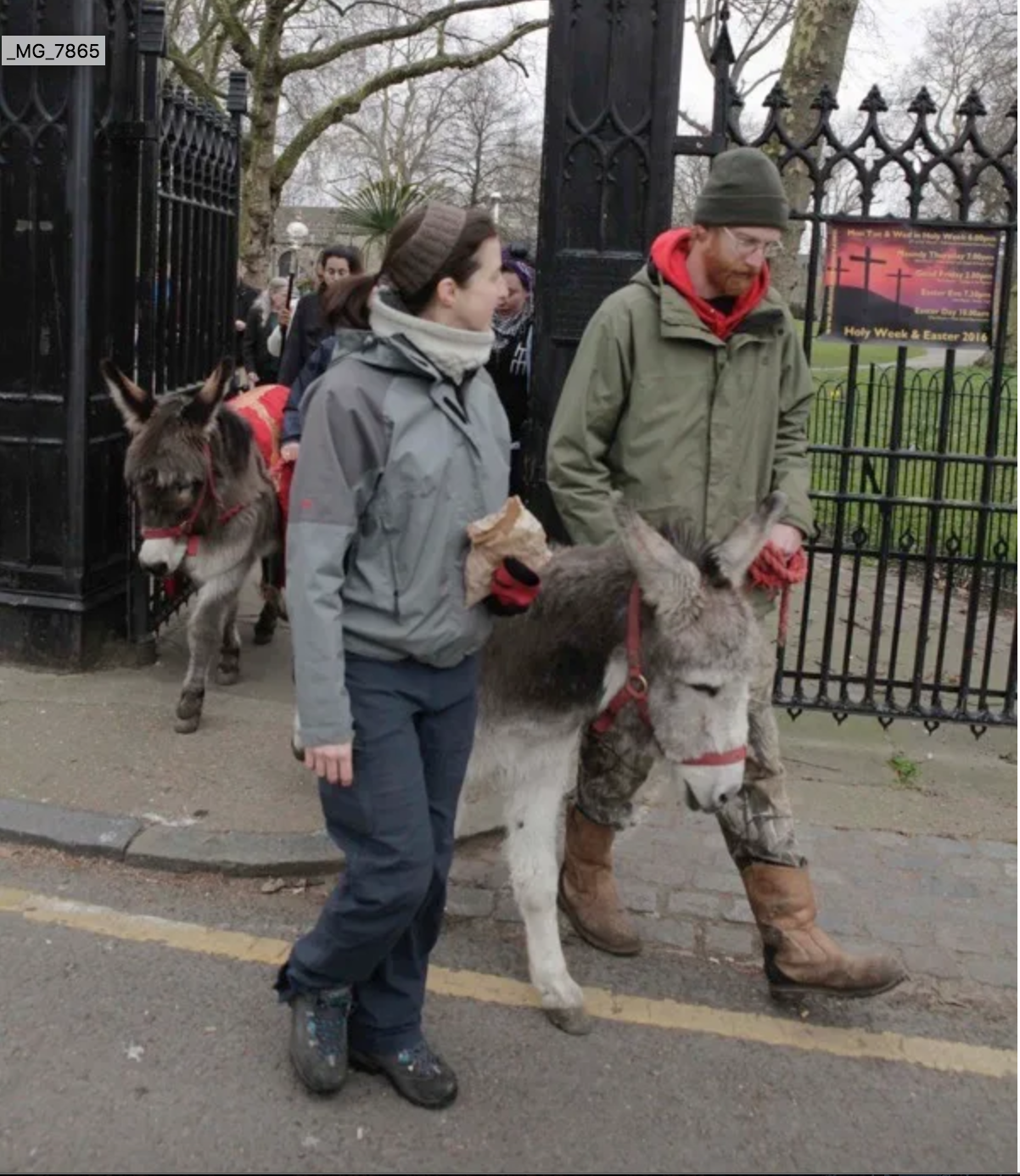
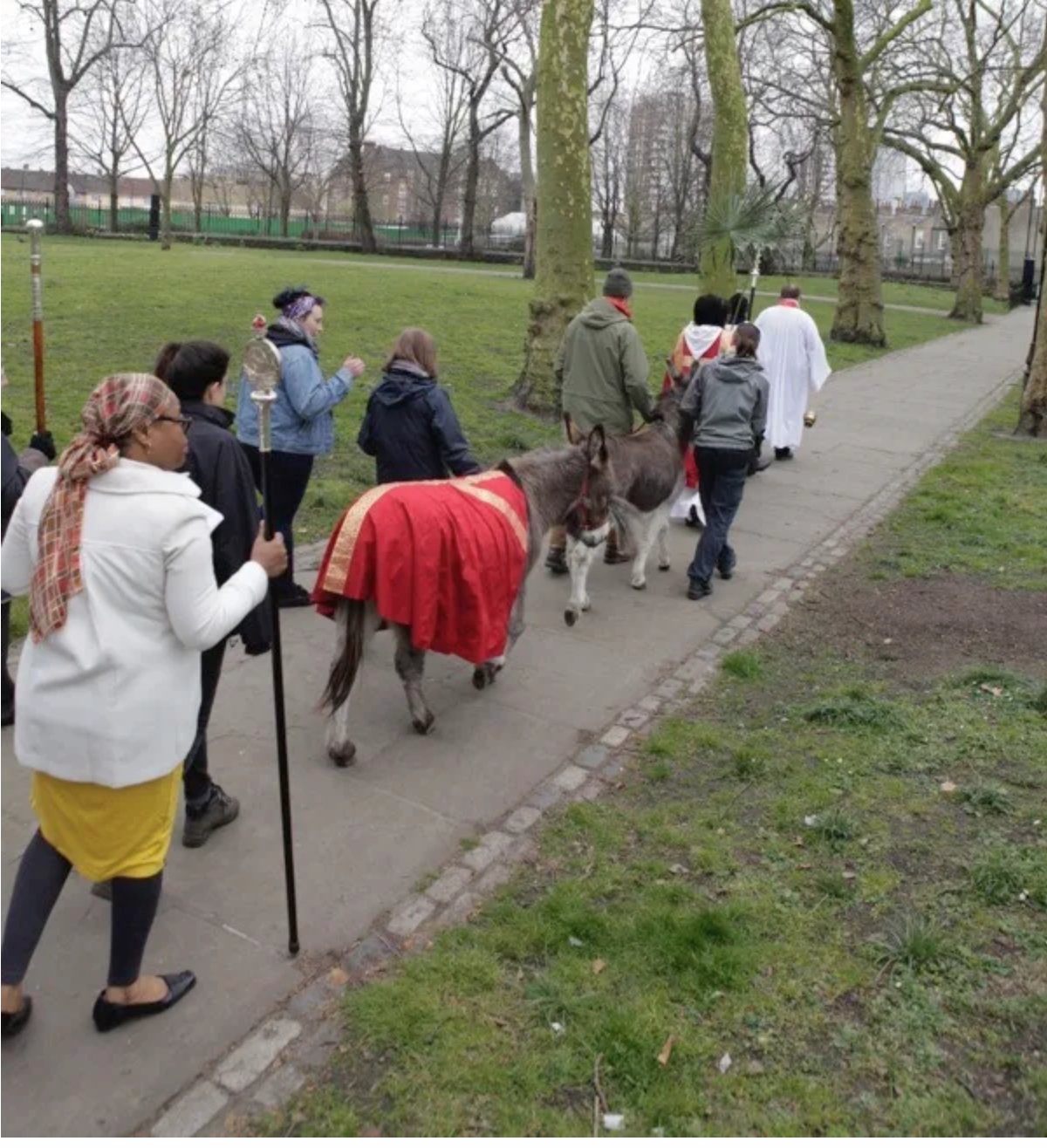
George and Dunstan have shared their lives and have formed a very close bond. Donkeys are social animals, and every donkey needs a companion. Even within a large herd of donkeys you will often find pairs of donkeys forming a bond. They will graze together, follow each other around the paddock, and groom one another. It has often been said that George and Dunstan are like an old married couple. They will sometimes take their frustrations out on each other (you may well have seen them chasing each other round the field!). But neither could live without the company of his trusty companion.
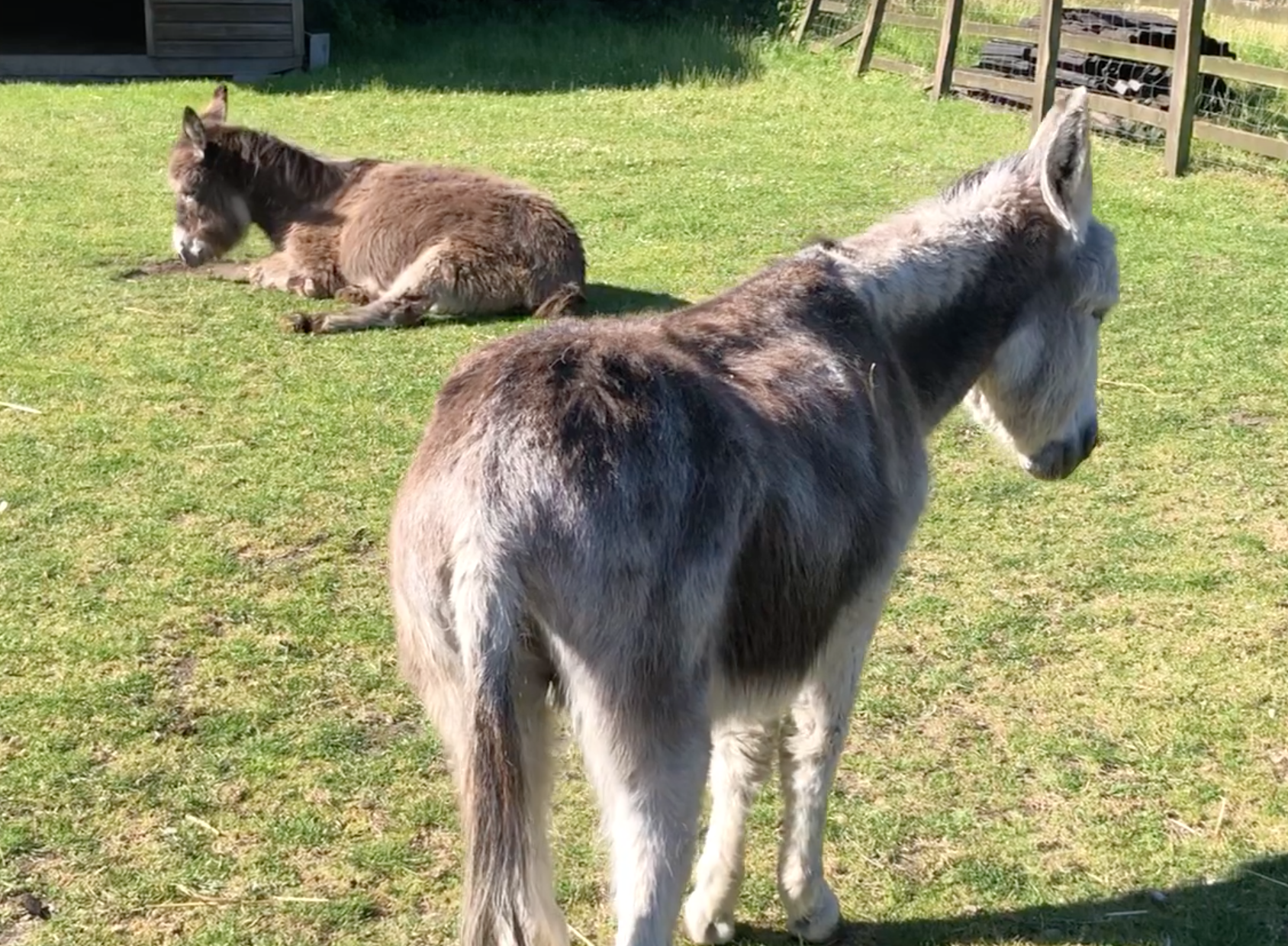
Bonded donkeys will quickly become stressed and agitated if they are separated. Which is why we always make sure that George and Dunstan are together. When a donkey loses his or her companion, just like us they will grieve the loss. They are likely to lose their appetite and stop eating. When a donkey stops eating it can lead to a dangerous condition called Hyperlipaemia. So in order to try to prevent the donkey becoming unwell, a donkey owner will try to find a new donkey companion as quickly as possible, and hope that a new bond forms.
Each day on the farm begins when we open the barn doors. We are always greeted by George and Dunstan braying loudly, asking for their breakfast. Later the braying starts again, when they remind us that it’s time to walk them out to one of the fields.
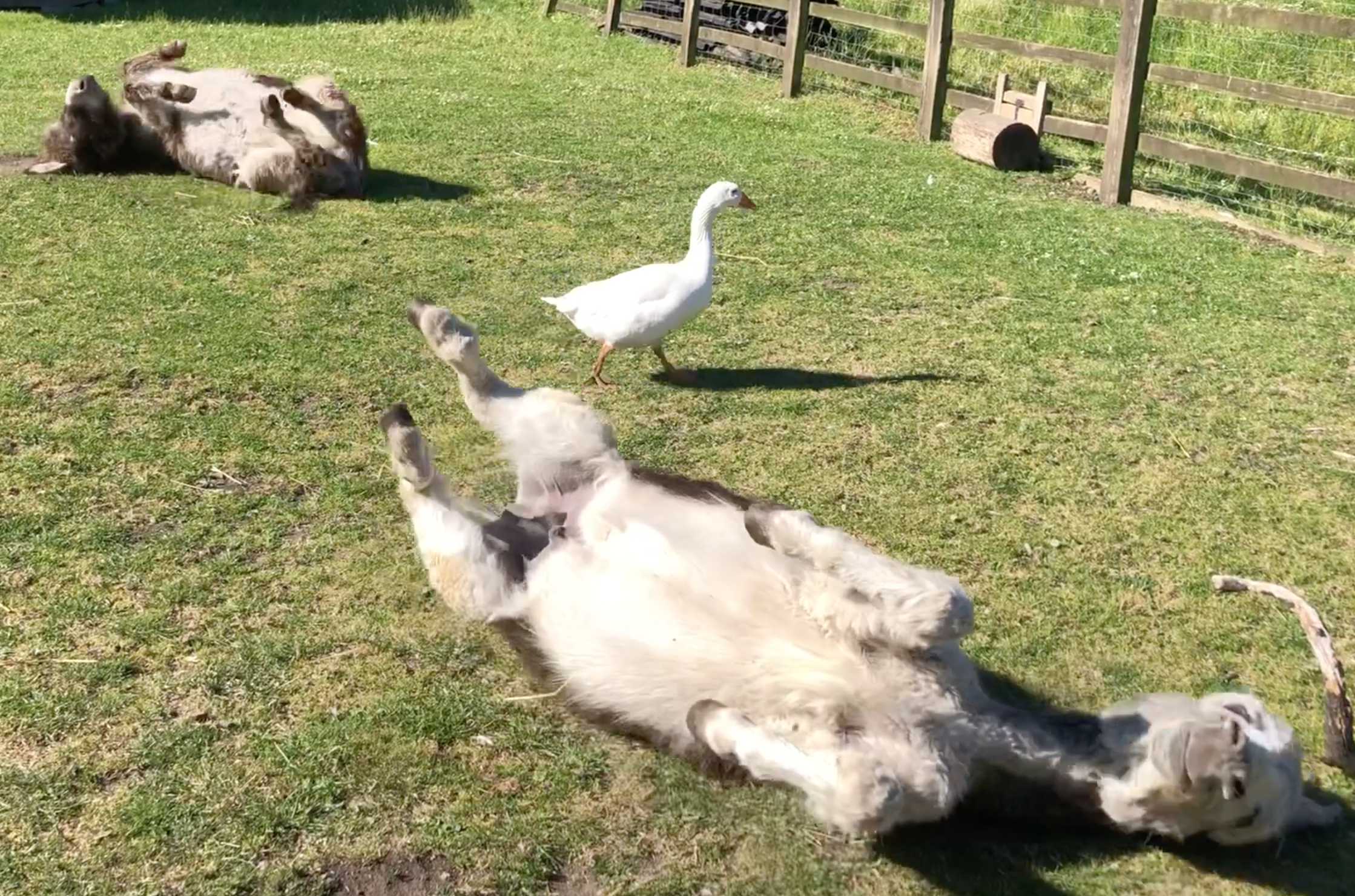
They often share their days with the Chinese or Shetland geese. You may have seen the Shetland geese pecking at George and Dunstan’s tails! Remarkably it doesn’t seem to bother them. The Chinese geese, on the other hand, prefer to keep a distance from their donkey companions. They will quickly waddle away if George or Dunstan approaches.
George and Dunstan enjoying their daily dust bath, which helps repel flies, protects them from the heat and cold, grooms their coats – and gives them a good back scratch in those hard to reach places!
One of the most important aspects of a donkey’s care is picking their hooves. Donkeys evolved in a desert environment, and their hooves are not suited to wet muddy ground. So we pick their hooves twice a day, to remove all the mud (and poo!) and any small stones which might have become wedged in the hoof. This helps to prevent infections which could progress to cause lameness or more serious conditions.
George and Dunstan are often prone to giving a little protest when they don’t want their hooves picked! But if we think about how many different people have picked their hooves over the years, and how many people they have trusted with this task, then we realise how patient they actually are.
Donkeys are very sensitive. When we work with George and Dunstan we are always aware that the slightest change in our behaviour will affect them. They way donkeys see and experience the world is very different from our own perception. Their sometimes difficult behaviour will always have an understandable cause, even if we don’t know what that is. The ‘stubborn donkey’ of folklore is probably just frightened or stressed, or in pain.
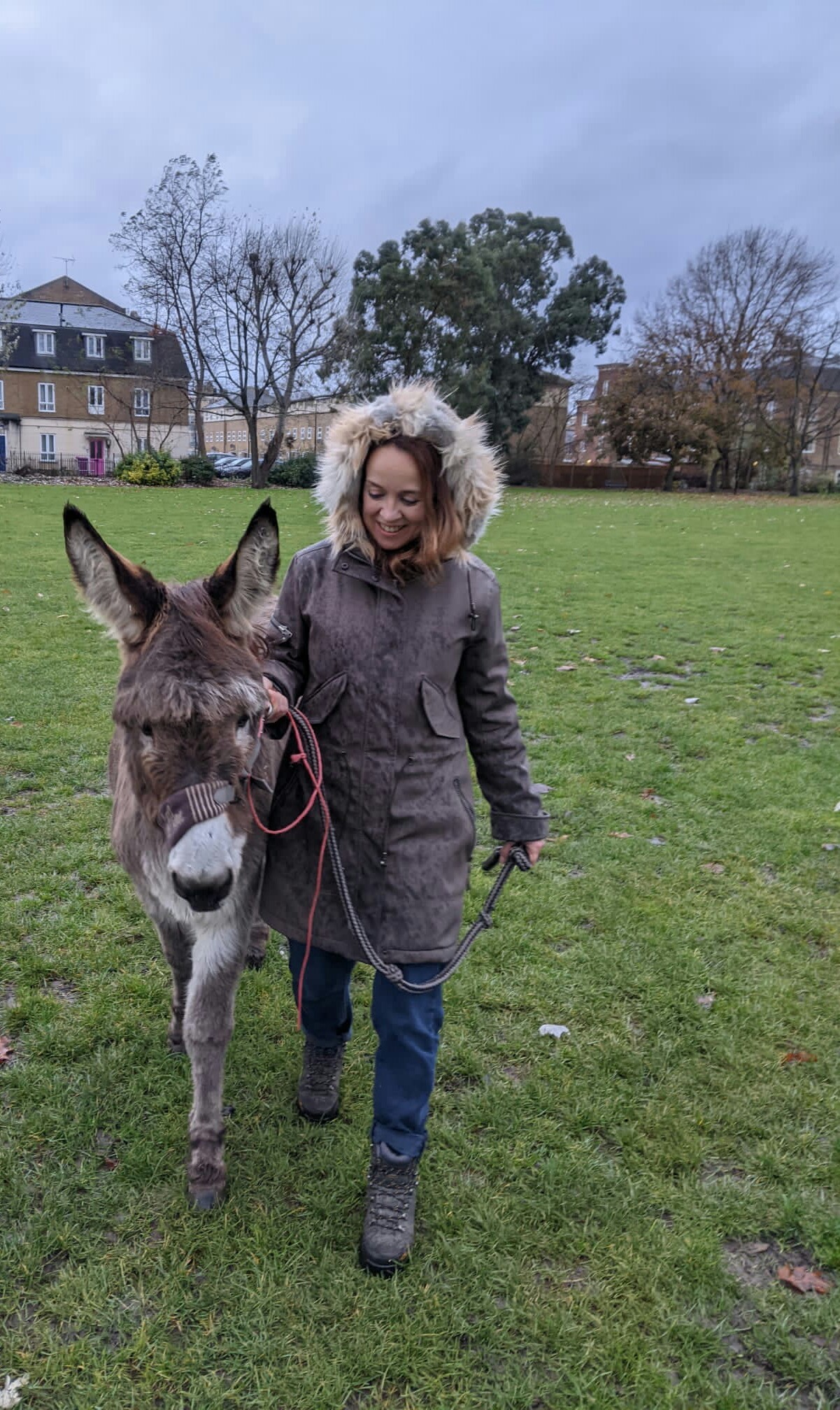
Donkeys don’t readily show their feelings (animals often try to hide their pain or vulnerability to protect themselves from predators), but they do communicate through their body language. The position of a donkey’s ears is a good indication as to how they are feeling. If they’re feeling stressed or threatened, they will pin their ears back. If they move their ears to the side or front as you approach, that’s a sign that they feel safe and happy in your company. They may go further and rest their head on you or rub their head against you, as a sign of affection. You will also see them hanging their head and drooping their bottom lip, which looks somewhat morose to us, but it is actually a sign that they are blissfully content.
So next time you give George or Dunstan a stroke or a handful of feed, watch their body language and see how much they are enjoying it.
It takes time to build a relationship with a donkey, but our efforts can be rewarded with love and loyalty. George and Dunstan have a special place in the hearts of staff, volunteers and visitors to the farm. And I can tell you from my own experience, giving George a hug and Dunstan a back scratch is a perfect way to start the working day.
Donkeys can live till they are thirty or forty years old (the oldest recorded donkey lived till the ripe old age of sixty!). George and Dunstan have been with Stepney City Farm from the beginning, and they have seen many changes on the farm. We very much hope that we can enjoy plenty more years with them on the farm.
* * * * *
There are over 50 million donkeys living on our planet. Many are working donkeys, others live a comfortable life in sanctuaries, farms and zoos. Donkeys have a long history. They were first domesticated 6,000 years ago in North Africa and Egypt, where they were valued for their meat and milk. They went on to be used to transport silk along the now famous Silk Road, a journey of 4000 miles which took several years to complete. No donkey was able to manage the entire journey. It was the Romans who first brought donkeys into Europe, to use in agriculture and to work in vineyards.
If you would like to learn more about donkeys you can visit The Donkey Sanctuary website