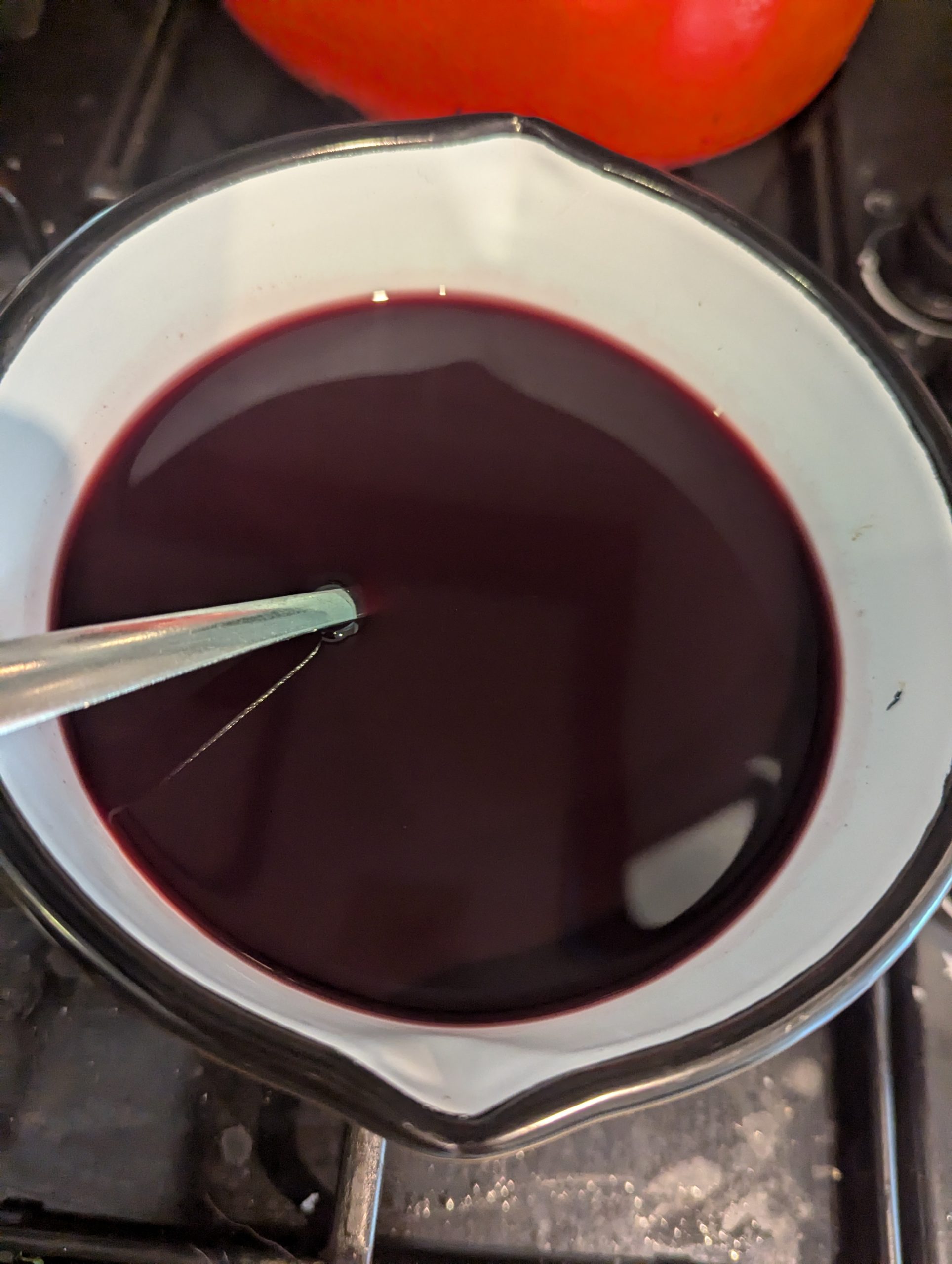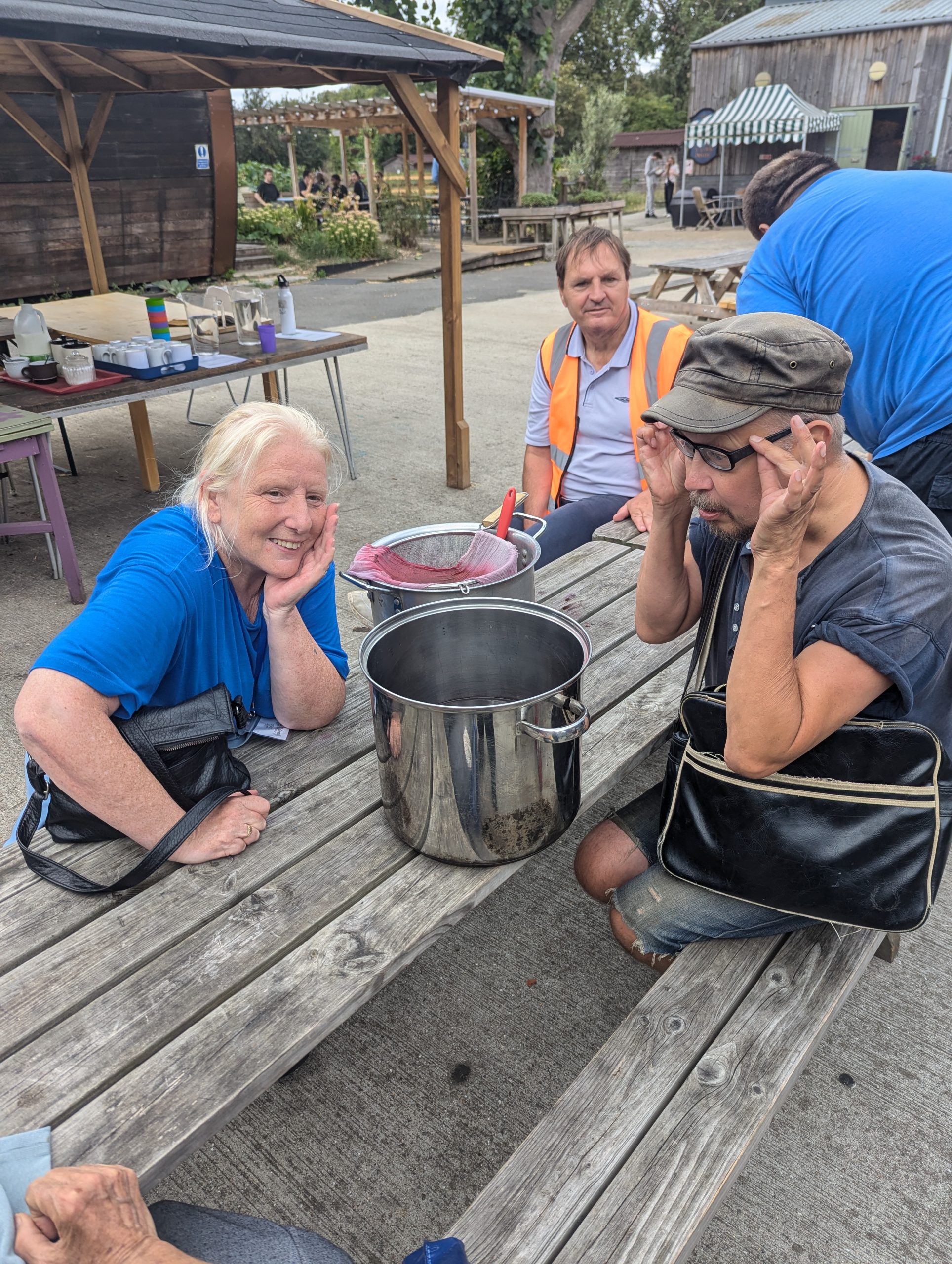

Susy, our Greencare Volunteering Coordinator, along with the volunteers, have been getting their hands dyed a rather lovely purple colour. All in aid of making some elderberry syrup. It has been used by herbalists through the ages and can help to relieve cold symptoms. Here she tells us how to make some and expains it’s use as a medicine.
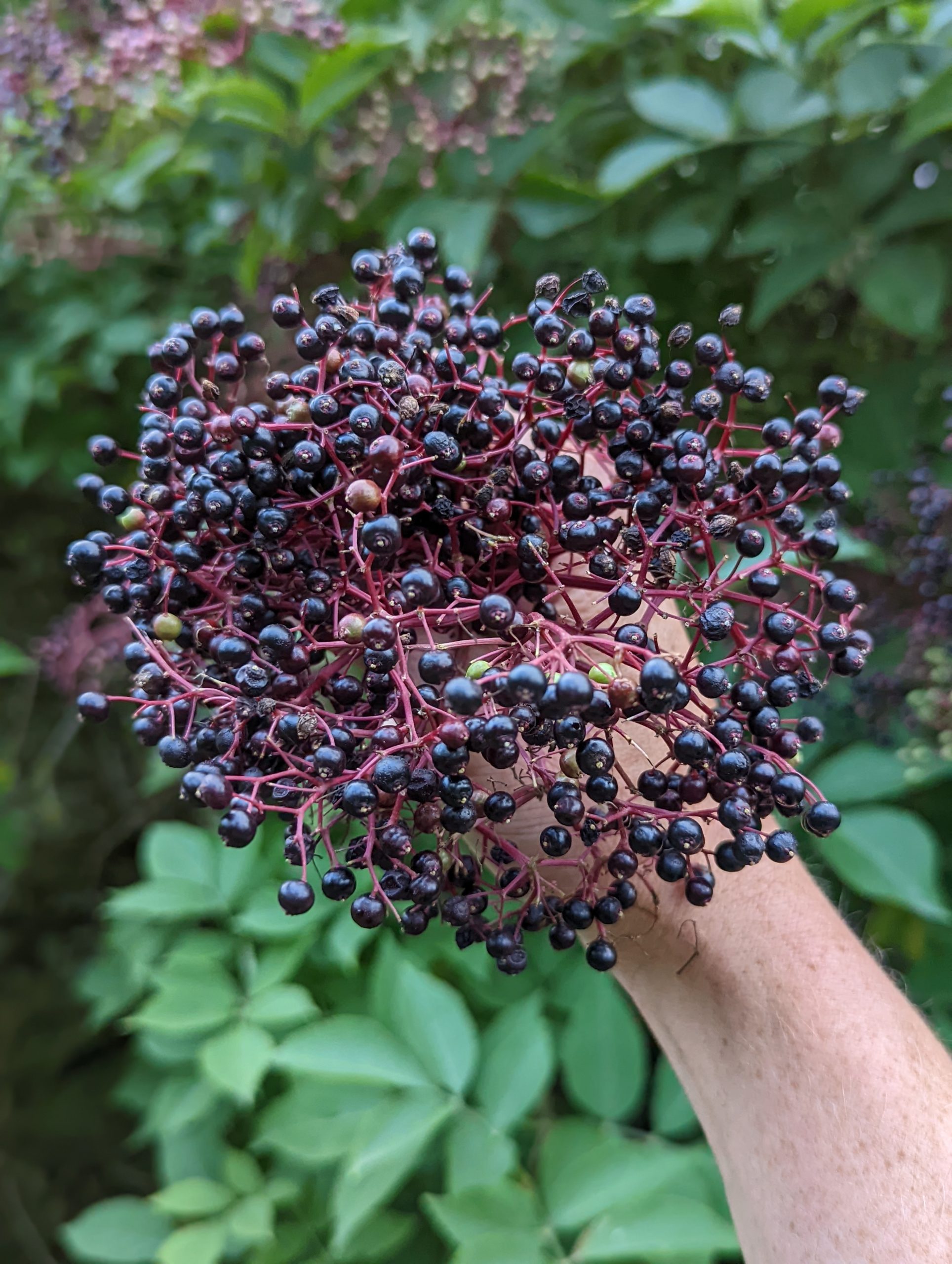
If you’re out and about in London at the moment, you might have noticed the elderberries have ripened on the trees. These lovely dark berries are a brilliant immune tonic. They have been used by herbalists to support our immune system to fight infection for centuries. There is lots of scientific evidence that regularly taking elderberry syrup at the beginning of a cold or flu reduces the severity and length of symptoms.
When identifying the berries, make sure you’ve got the correct plant. The leaves consist of 5-7 leaflets, in pairs with a single end leaflet. Each leaflet is elliptical with regular teeth and a pointed tip. The leaves are opposite – appearing from buds that are placed opposite each other along the stem. The leaves have a musty, rather unpleasant smell. The berries ripen from green, to purple, to black. They are on red stems and are often quickly eaten by birds.
It is important you don’t eat the berries raw, as they cause digestive issues if eaten raw. Once cooked, they don’t cause any issues.
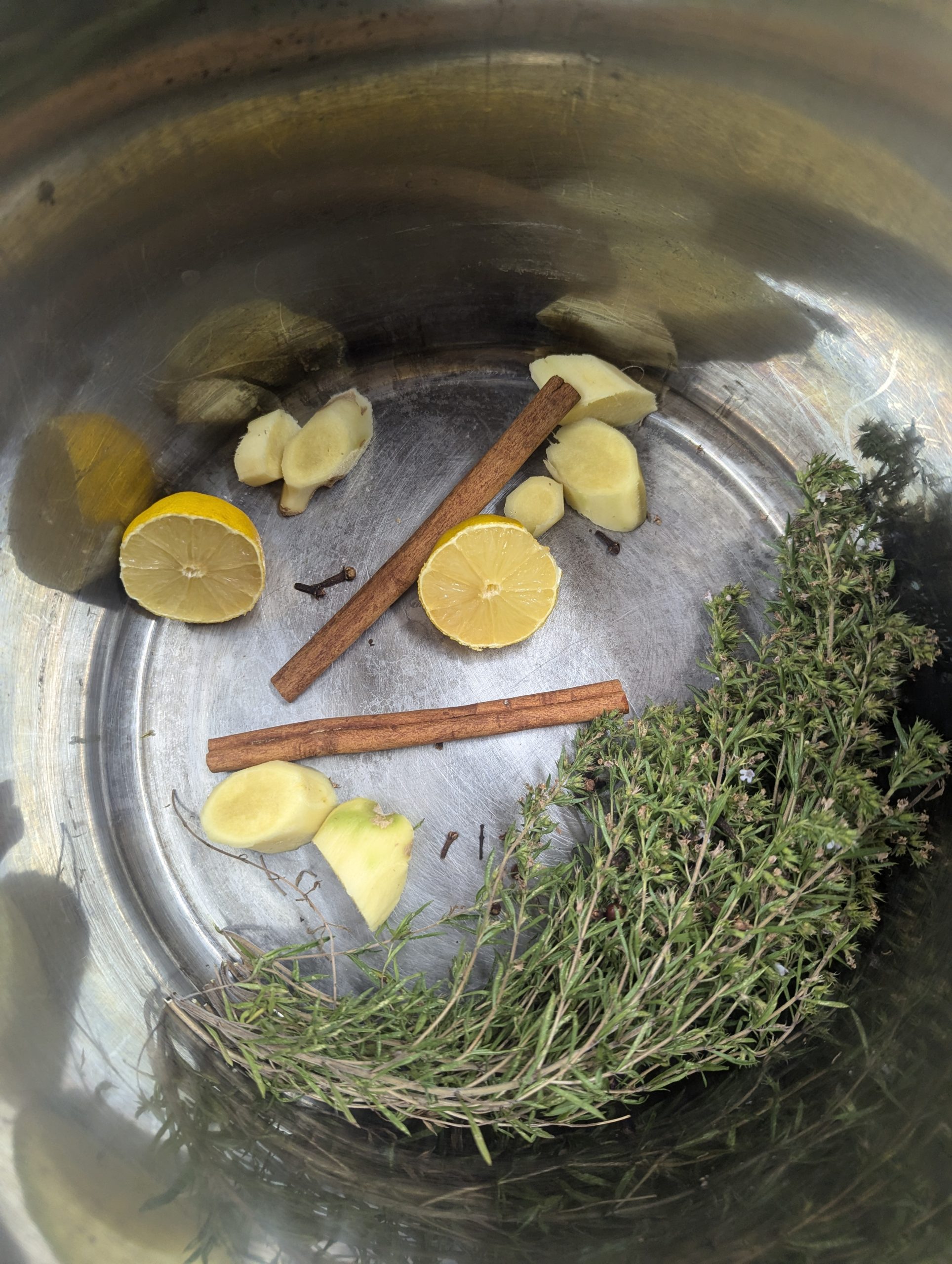
To make the syrup, we used the following ingredients:
400ml water
100g black elderberries (1 1/3 cups fresh)
2 tbsp ginger (grated)
1 tsp cinnamon
1 lemon
½ tsp ground cloves
Handful of thyme
100ml honey
First one of our volunteers picked the elderberries from the trees dotted around the field. To pull the berries off the stems, it’s easiest to use a fork – but it does take a little while and your fingers get dyed a beautiful purple.
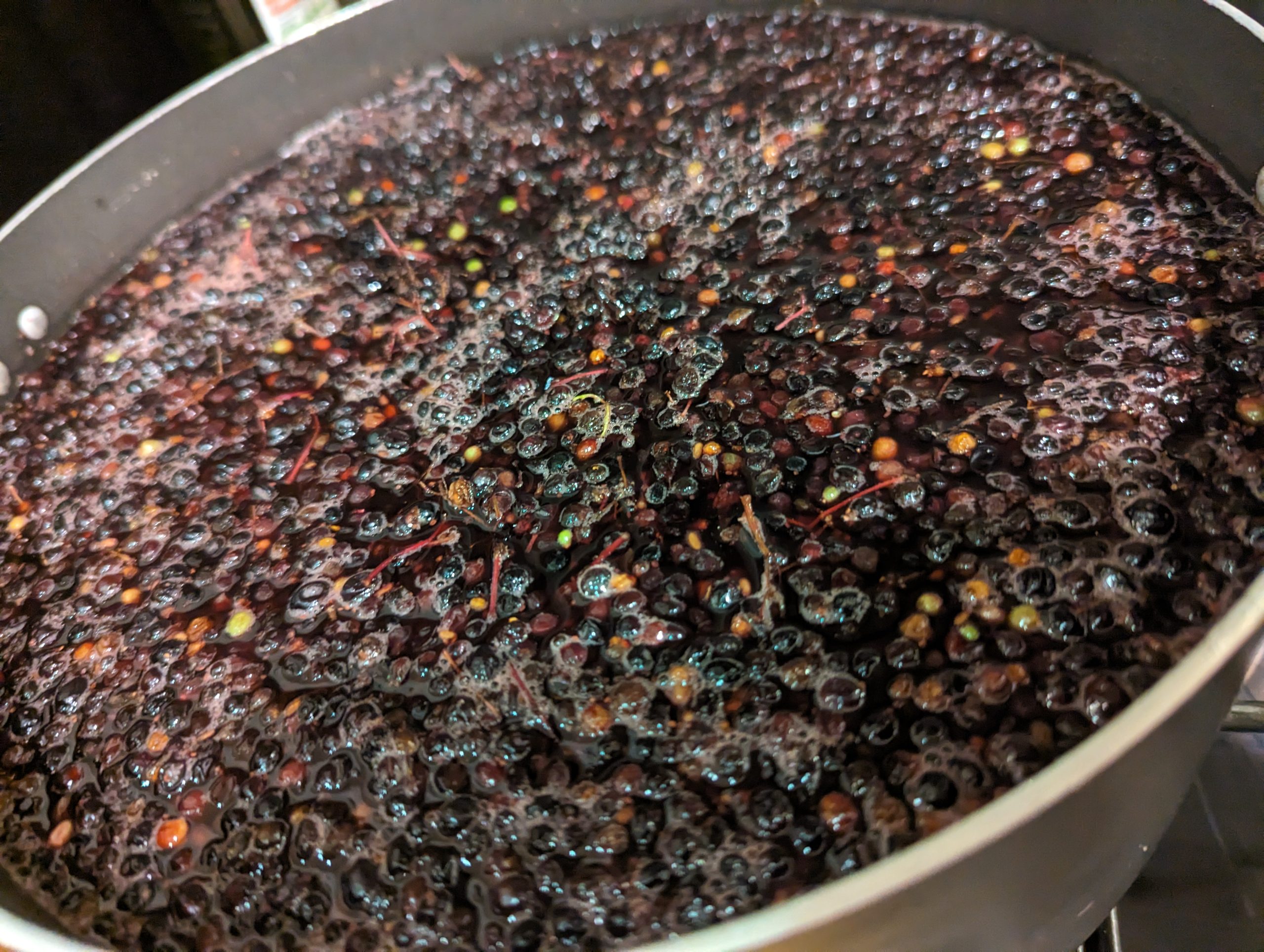
Once the berries were processed and washed, we then poured the water into a medium saucepan and added the elderberries, ginger, lemon, thyme, cinnamon and cloves. We brought it to a boil and then covered and reduced to a simmer for about 45 minutes to 1 hour until the liquid had reduced by almost half.
We then removed from heat and let cool until it could be handled. Next, we mashed the berries carefully using potato masher and then poured the liquid through muslin into jug. We then discarded the elderberries and let the liquid cool to lukewarm. When it was no longer hot, we added the honey and stirred well. Once the honey was well mixed into the elderberry mixture, we poured the syrup into sealable jars and shared them out to members of our group, who took them home and stored them in the fridge.
It should be use within three months, but normally gets used up before then. The best way to take it is to take a large spoonful three times a day as soon as you notice any symptoms of a cold or flu, until the cold or flu has passed.