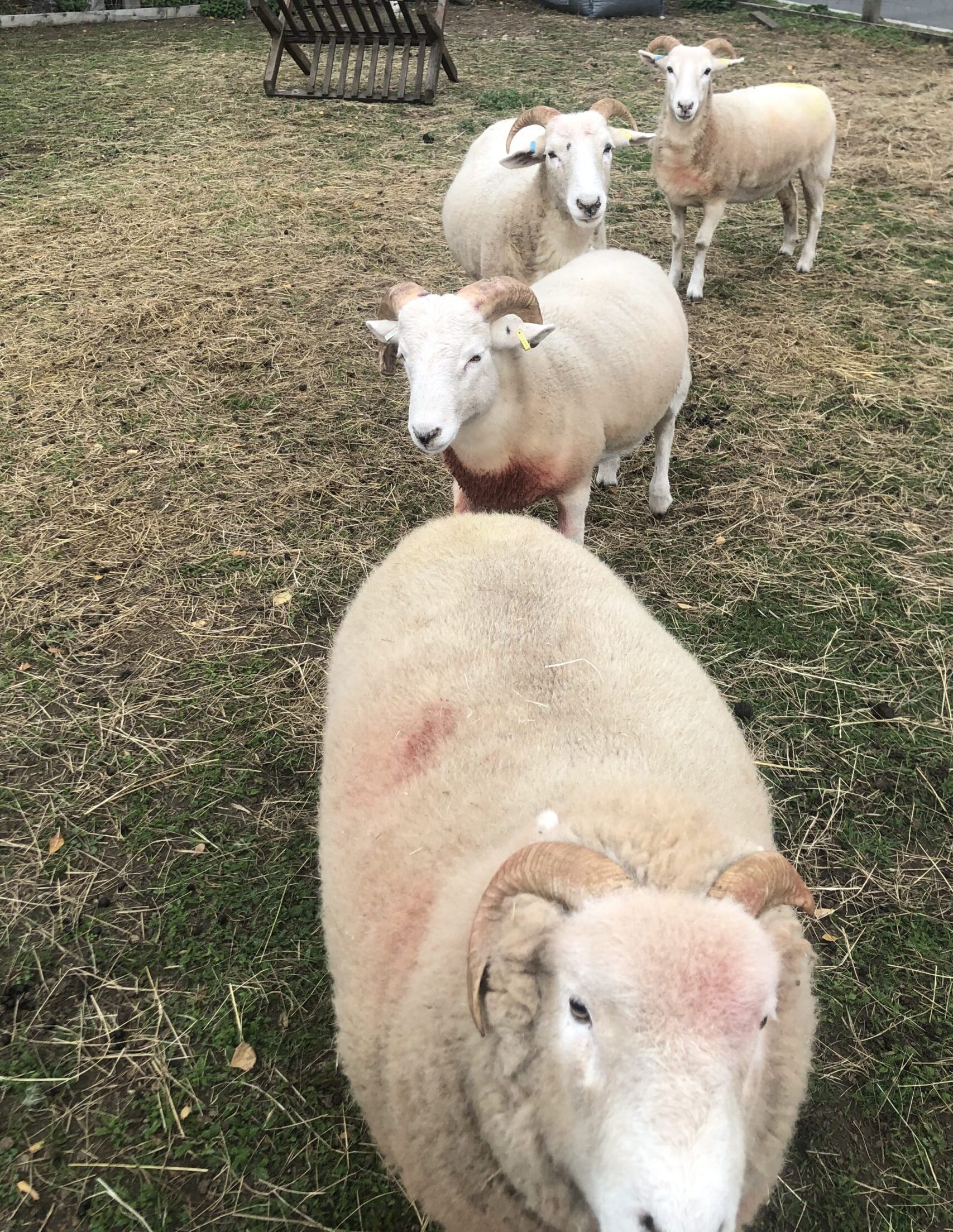

We have a new flock of sheep on the farm. A couple of ewes, a borrowed ram and one of last year’s lambs. Emily, our Farmyard manager, will walk you through the new editions below…
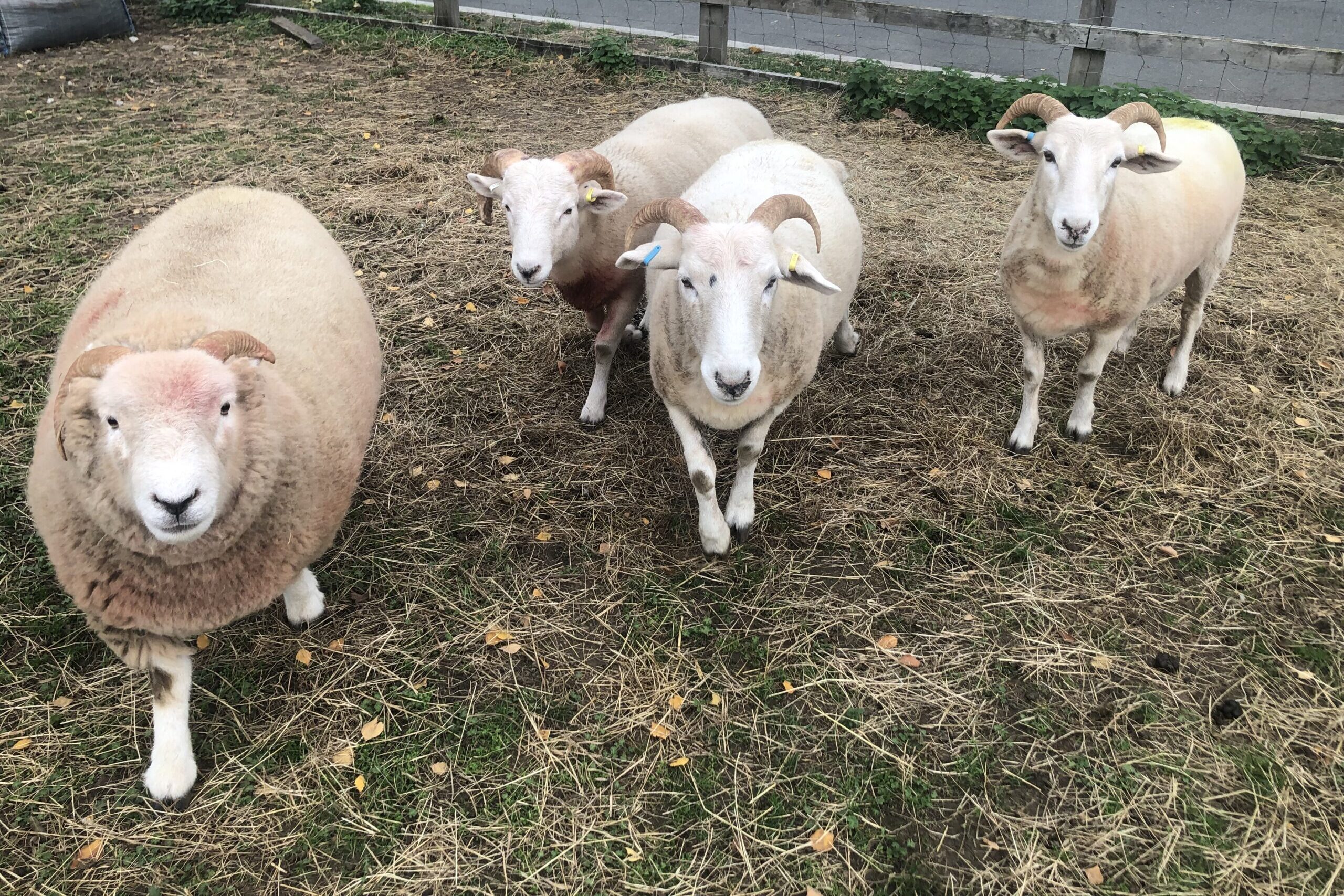
Regular visitors to the farm might notice that we’ve added a few more sheep to our flock! Due to various circumstances our little flock of Exmoor Horn sheep had dropped in number, so we thought it was time to get some more sheep. And why not have a different variety? So we’ve welcomed three Wiltshire Horn sheep onto Stepney City Farm.
Wiltshire Horns are, to nobody’s surprise, from Wiltshire in south-west England. They are a native Britishbreed, known as a downland breed, as they are perfectly adapted to grazing the chalk downlands common in Wiltshire and other neighbouring counties.
The Wiltshire horn, like many of our native breeds, began to decline with the rise of wool production, but efforts from the Wiltshire Horn Society, established in 1923, ensured that the breed survived. After another dip in popularity in the 1960s and 1970s, when synthetic wool became more available commercially, the Wiltshire Horn was placed onto the Rare Breeds Survival Trust watchlist.
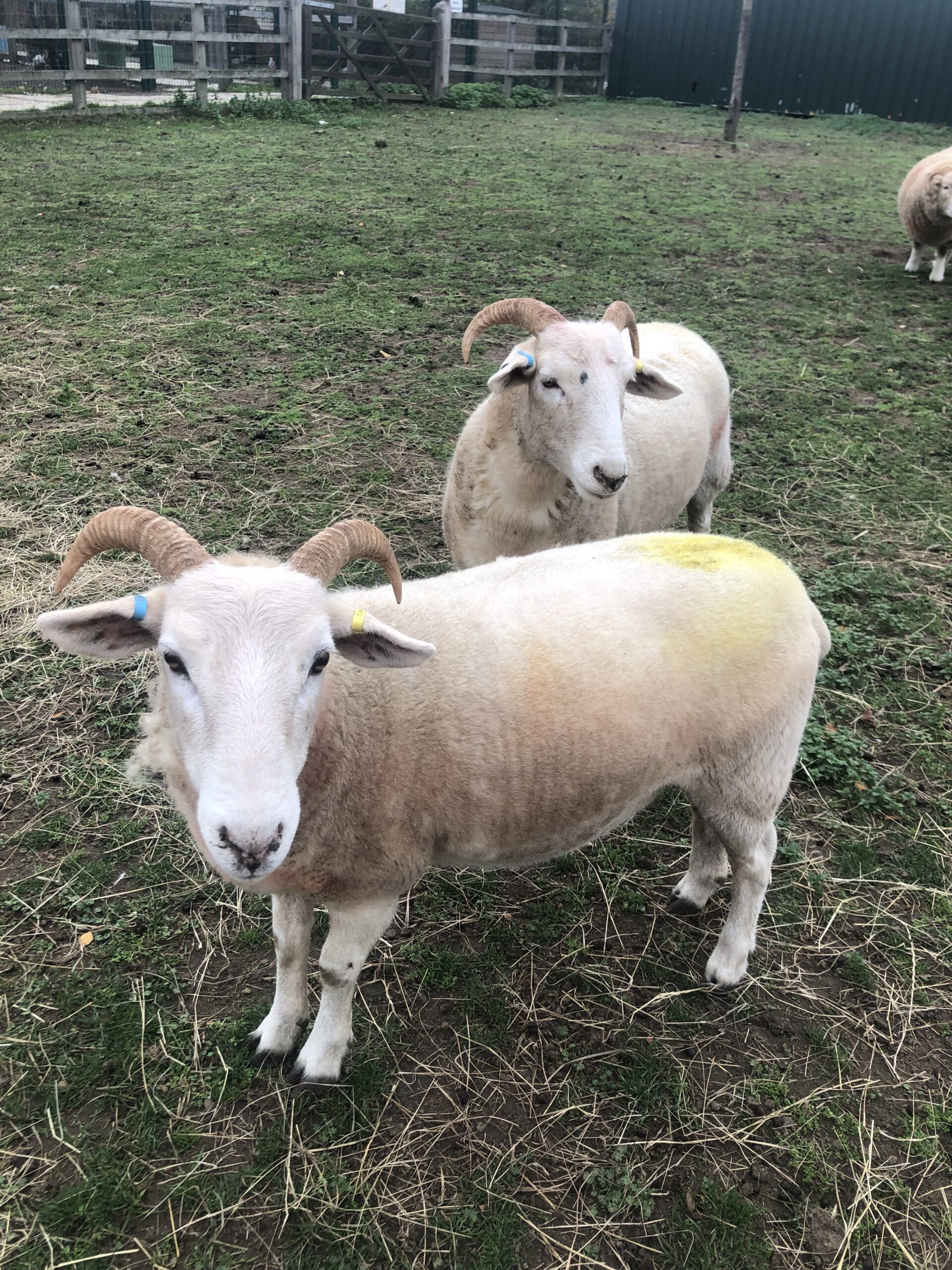
They were revived due to a rare trait in British native breeds – their ability to self-shed their fleece, eliminating the need to have them sheared. This led to an increase in popularity of the breed abroad, as they could cope more easily in warmer climates. Also their popularity increased with hobbyist keepers, as they were considered to be easy-care sheep.
Thankfully, these days Wiltshire Horns are no longer considered an at-risk breed. They are traditionally used for meat and are excellent grazers and a hardy sheep. The Wiltshire Horn sheep are very similar to our current Exmoor Horns, with a few specific differences. They aren’t as fluffy, so they look skinnier next to the Exmoors. They also have a narrower face, the combination of which makes them look rather delicate!
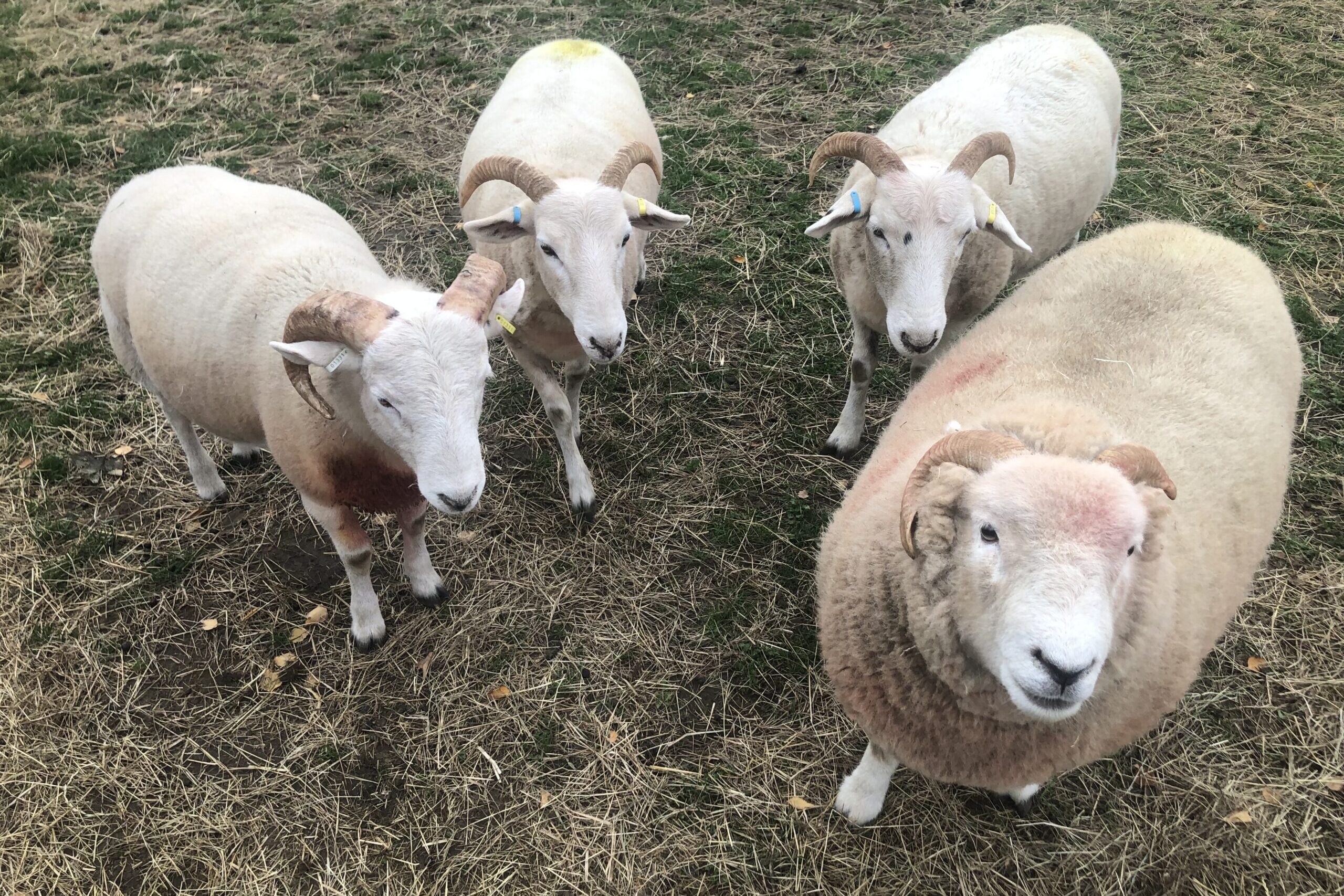
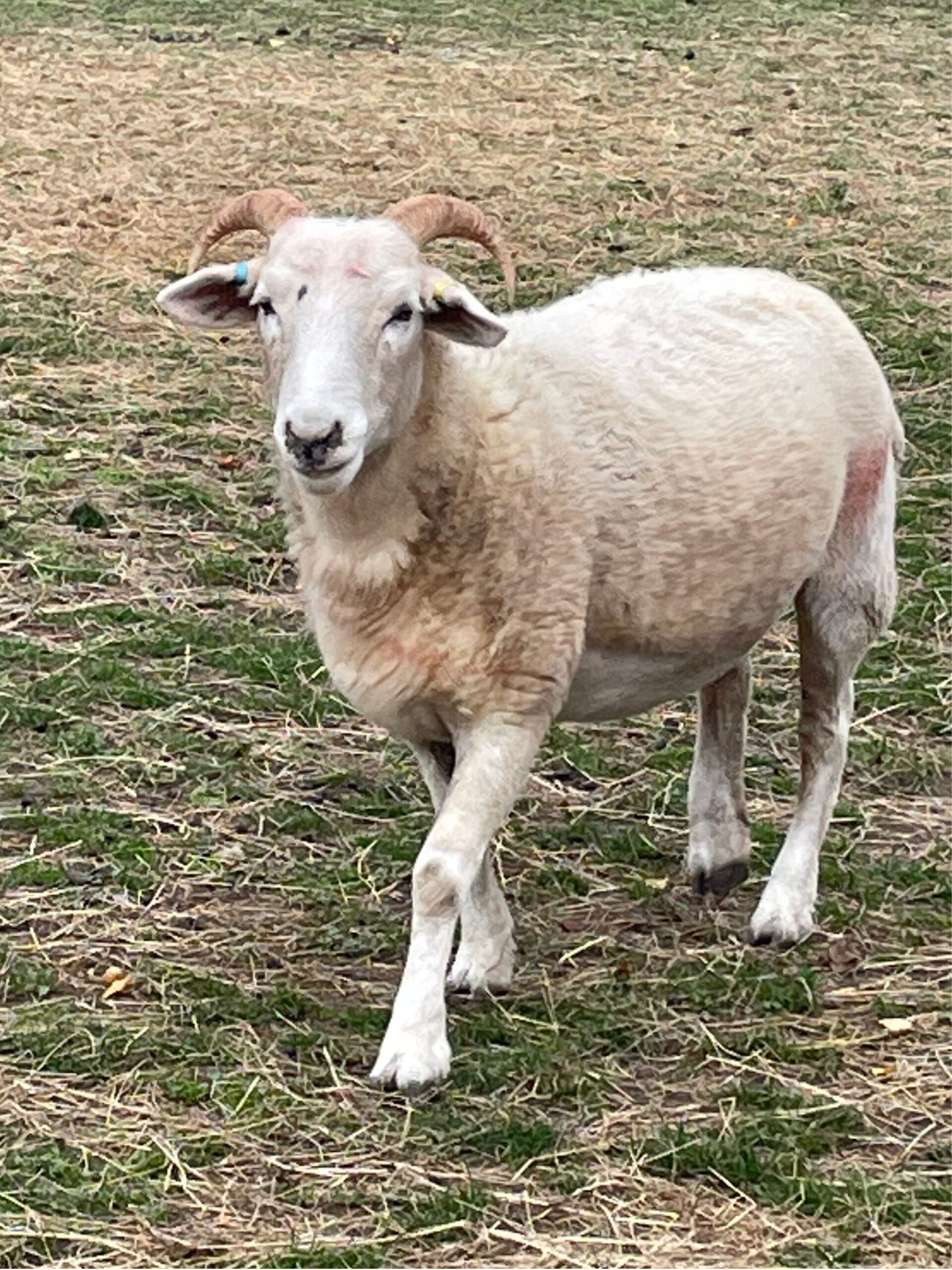
But let’s introduce our specific three. Firstly, we have the two ewes (female sheep) who are joining us. You may notice that they are very similar looking, but there is a trick for telling them apart! When you look at their faces, you may notice that one of them has a black spot between her eyes. The other has a completely white face. Our white-faced sheep has been named Viola and the one with the black spot has
been named Ivy. These names were specifically chosen to match with Lavender, a Stepney-bred Exmoor Horn ewe, who is the same age as our new girls and has joined them in their field. Viola and Ivy came from a farm that didn’t spend a lot of time with their sheep, so they’re still getting used to people. Ivy is a bit braver than Viola, and so if one of our girls comes up to you, it’s likely to be Ivy, whereas Viola hangs back a little bit. However, both girls are quickly learning that visitors to the farm normally bring food,
so it won’t be long before they learn to come over!
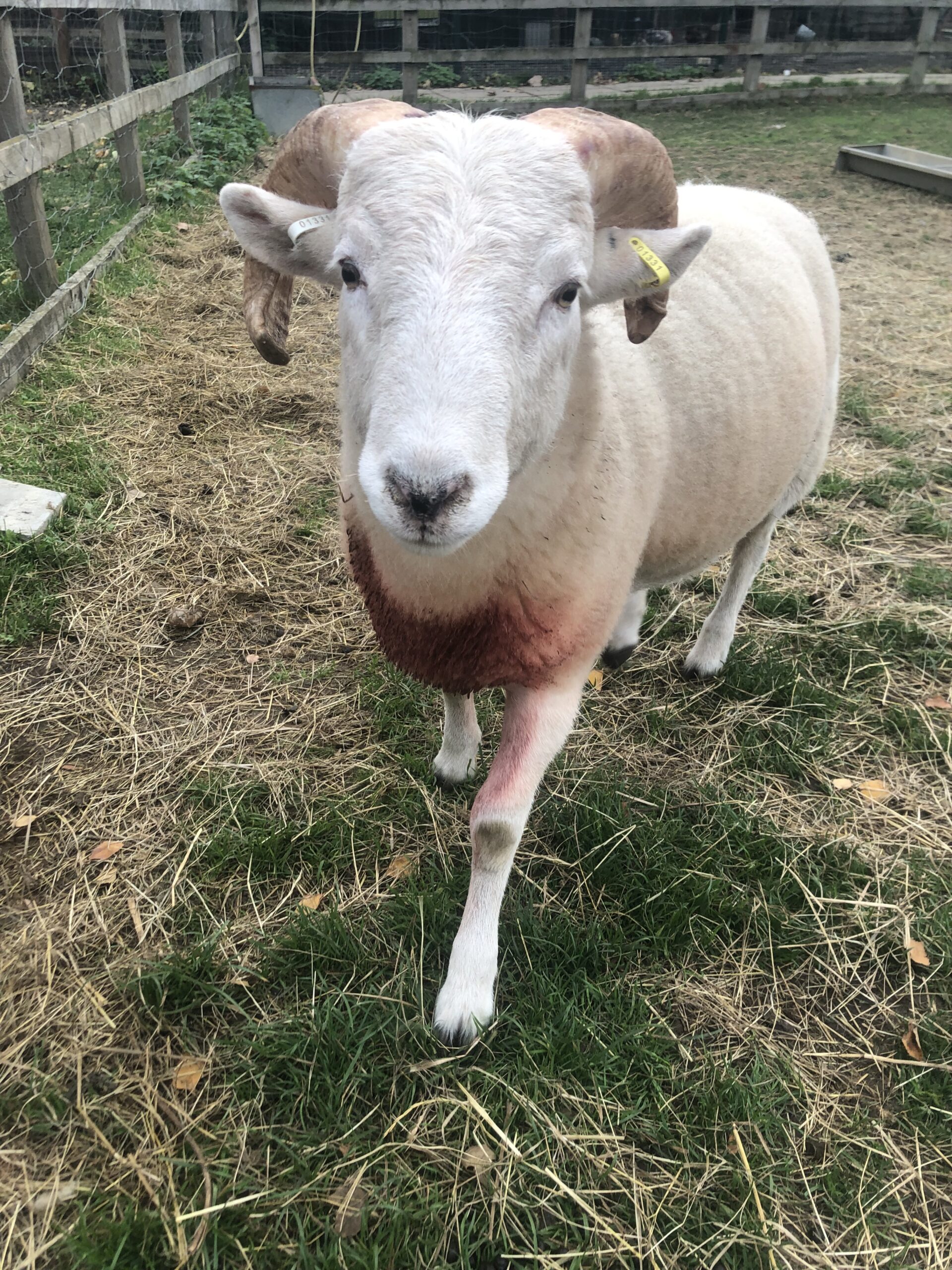
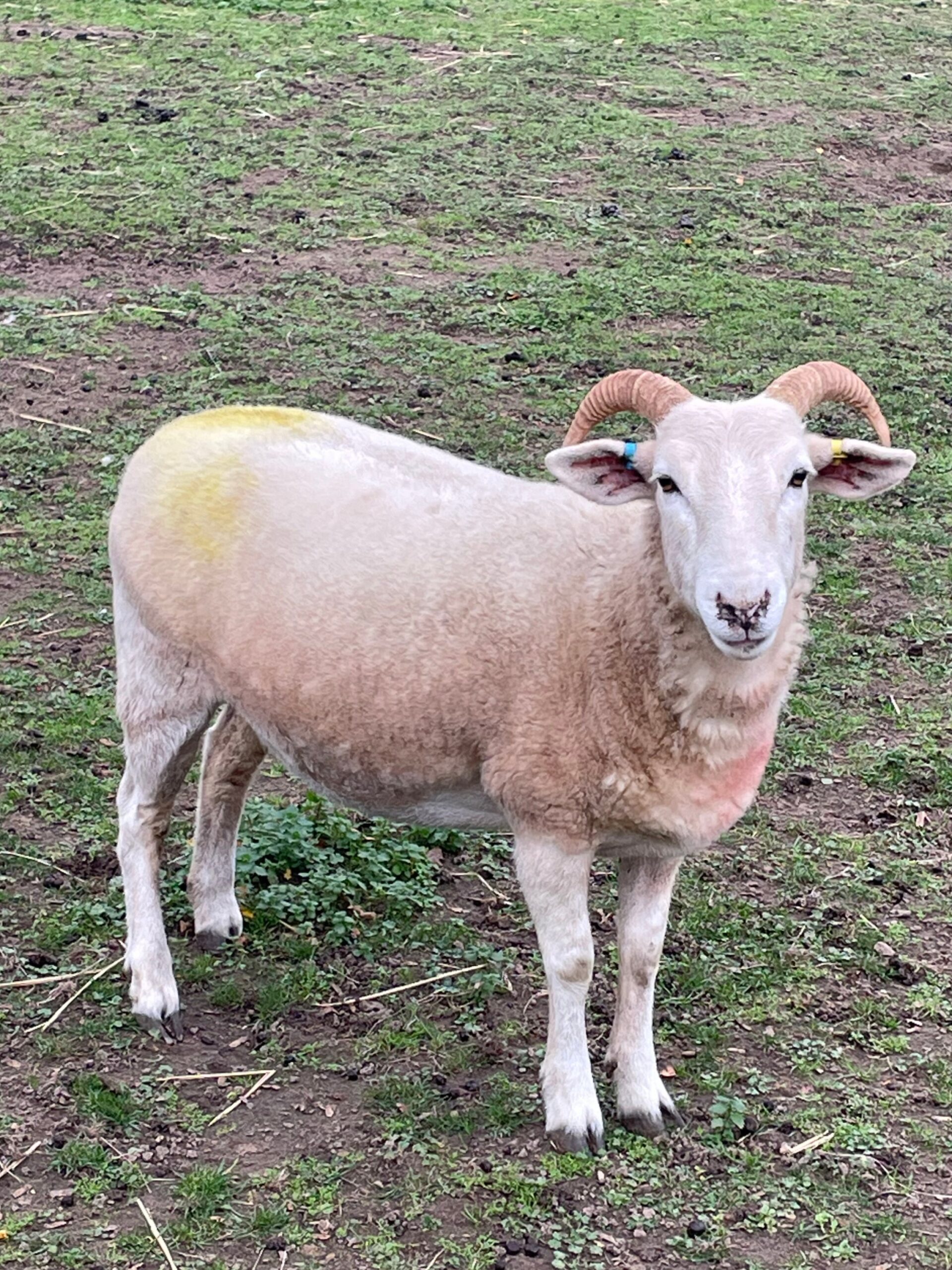
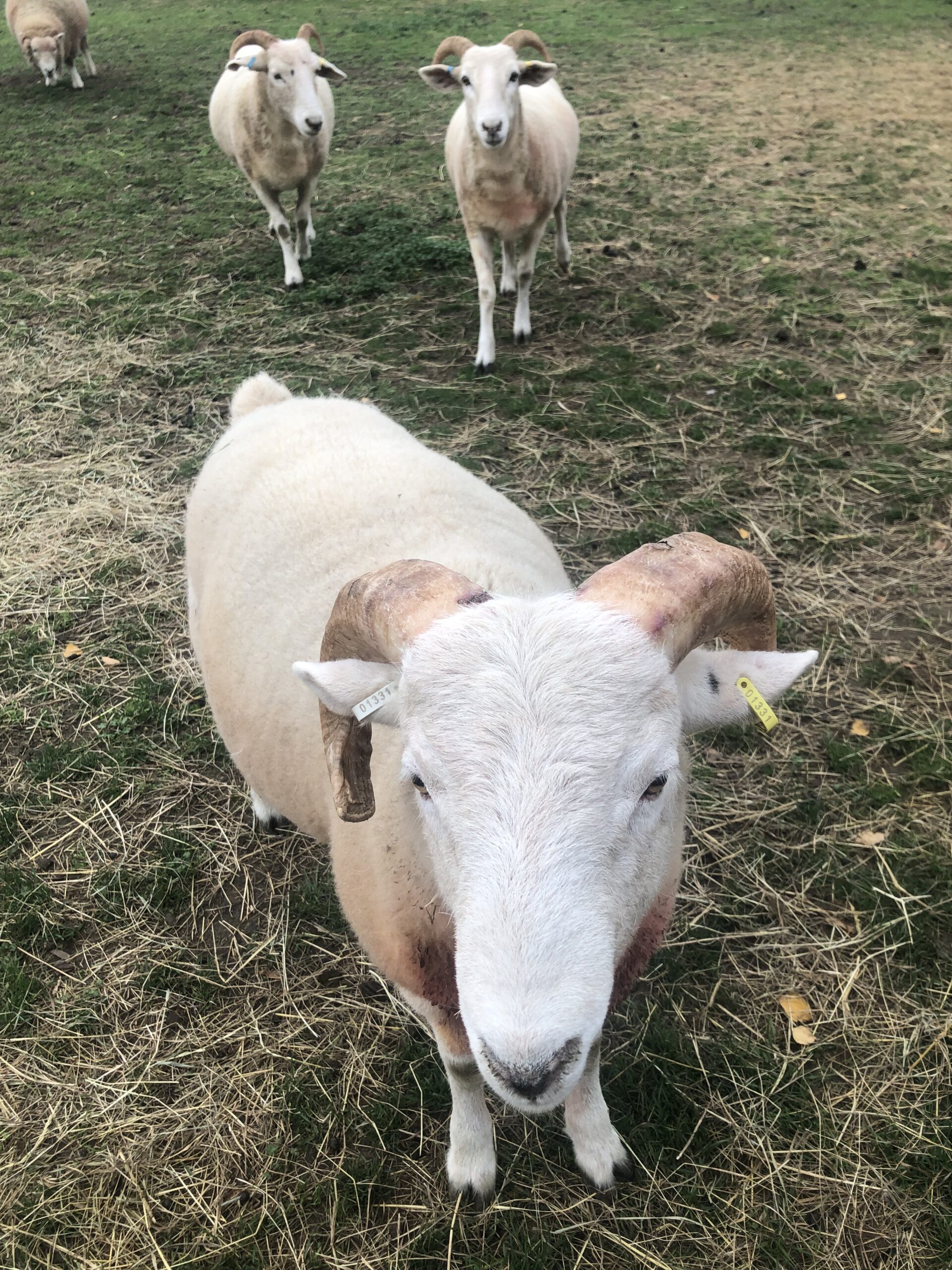
Our other new sheep is a ram (a male sheep) who is nicknamed ‘Dave’ because nobody can pronounce his full, registered name! I’m sorry to break the news but Dave is only on loan to us. He has an owner who is very fond of him. Our current ram, Hugo, certainly wouldn’t put up with a new male on the scene! Dave is with us for a few months to spend some time with the girls and then he’ll be going back home. He’s a very friendly boy who loves to come over to say hello, so make sure to pop in before he goes back home!