
As local residents and regular visitors will know, the Farm has expanded since 2019, and many will have noticed the impressive new pond on the west side of the site.

Backstory
In 2009, Crossrail compulsory purchased a third of original Farm site, which we had resided on since 1978. In compensation, they gave us new buildings, and upgraded much of the infrastructure on the part of the site which we retained.
In 2019, Crossrail reinstated half of the land they had used, which was no longer needed following completion of an access shaft to the tunnels below. This gave us 1.5 acres of land to develop and integrate back into the Farm
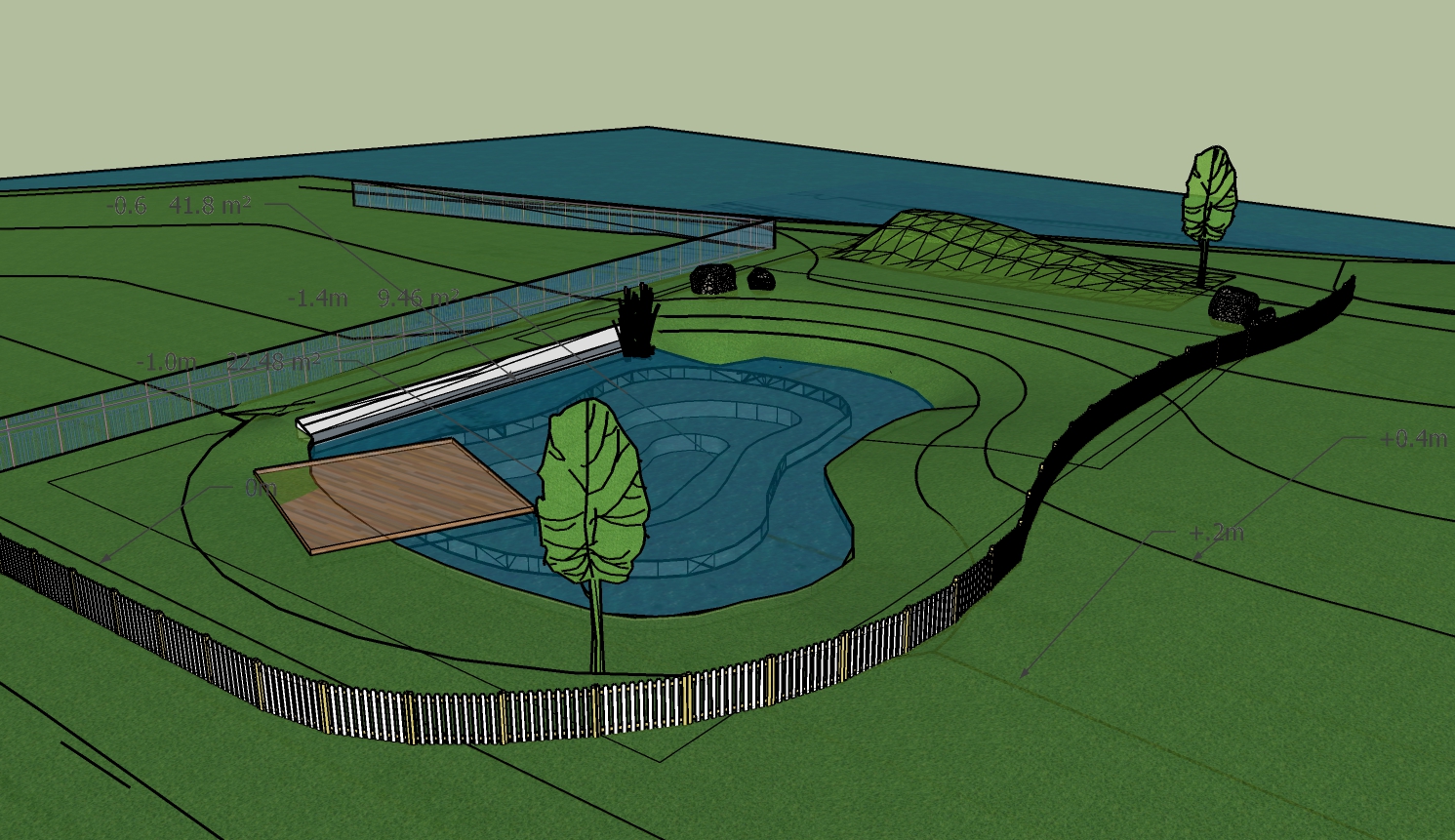
We came up with a design which doubled our capacity for food growing, making it into a sustainable social enterprise. The design also gave our chickens and ducks a large new ‘Poultry Paradise’; created additional animal fields for better rotation of pastures; and incorporated a large new wildlife pond.
Greener Cities
In 2020, we were lucky enough to be awarded £20,000 from the GLA’s Greener Cities fund to complete the pond, for which Crossrail had left us a dug-out section of ground. This might sound like a head-start, but as we discovered, an awful lot of work goes into building a good pond!
We were all set to begin the project with the help of the local community and volunteers in early 2020, when the Covid19 pandemic hit, and all activities had to be suspended for lockdown.
The great pond build
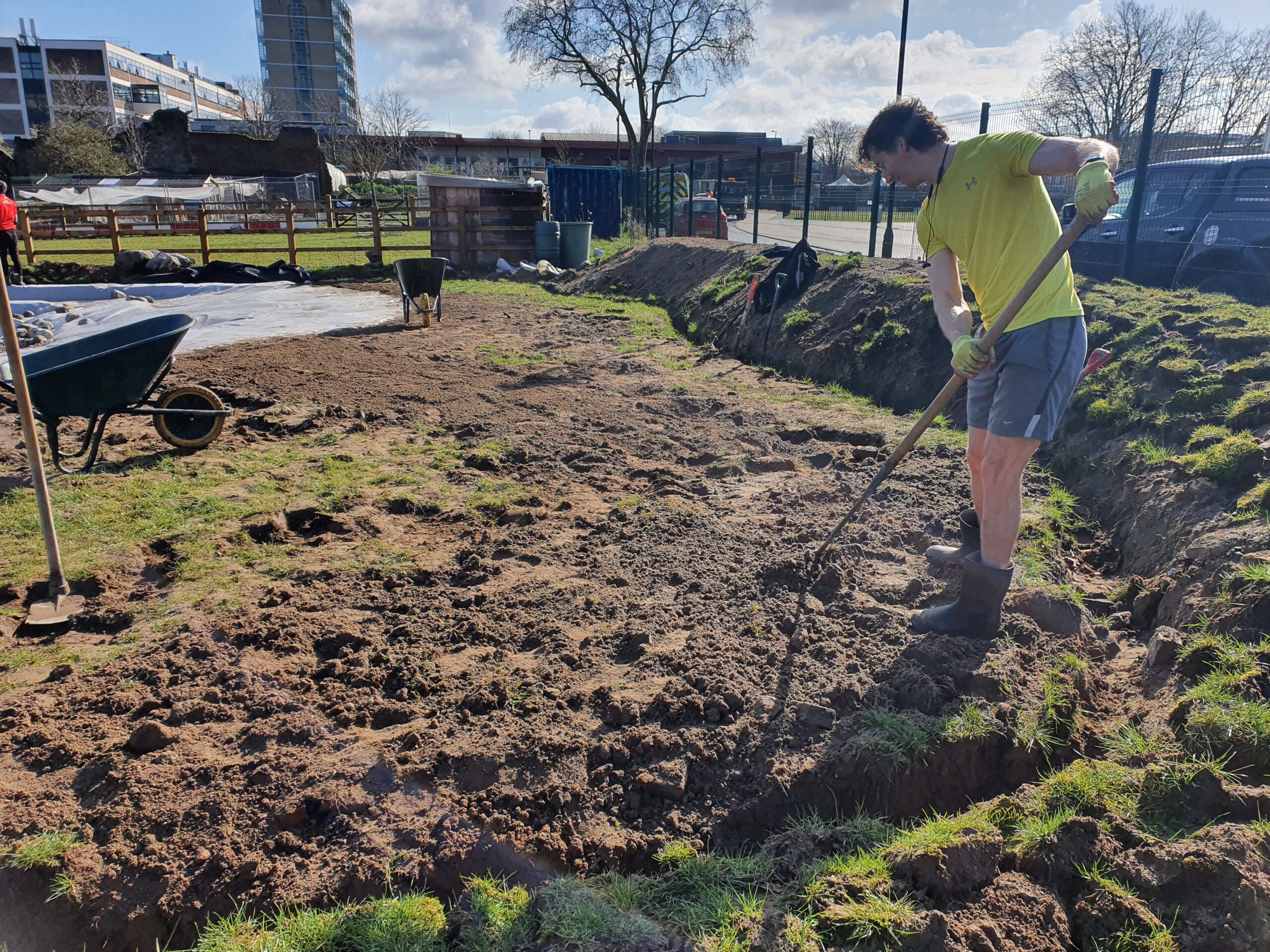
It was almost a year until we were able to resume work, under the able supervision of Project Manager Alex. But finally, in February 2021, we began by shaping the hole to create as many shallow beaches as possible and different levels of shelving for plants, smoothing the ground to ensure that the pond liner wouldn’t be damaged, creating a trench around the edge of the pond to anchor the liner in place, and picking out several tonnes of sharp debris by hand.
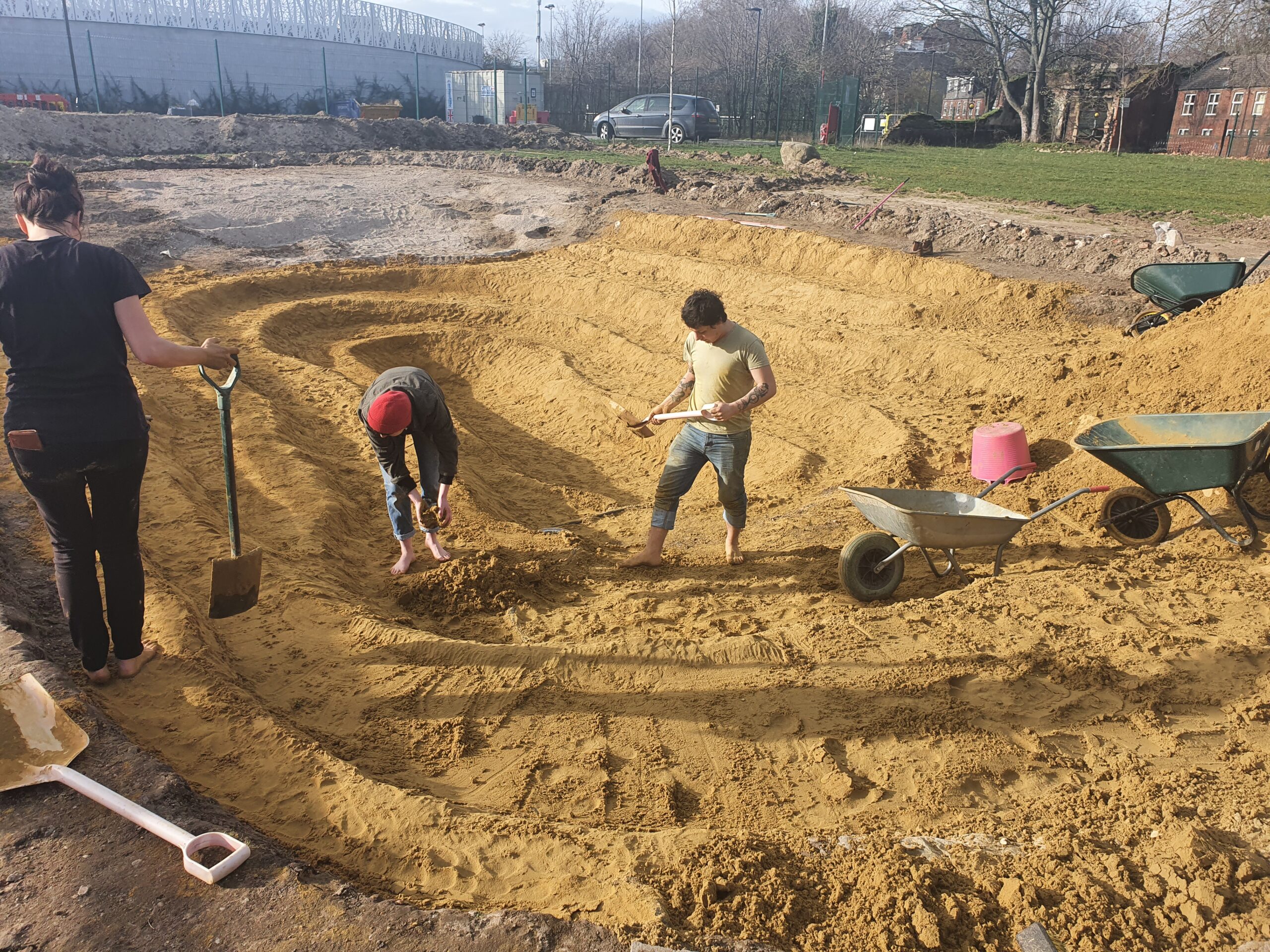
Next, we had to line the landscaped terrain with sand. This was a delicate job, with the sand needing to be patted down by hand, and easily disturbed by clumsy feet. So across two cold sunny days in February, the whole staff team got bare-foot, and pitched in to create possibly the largest sandpit in Tower Hamlets!
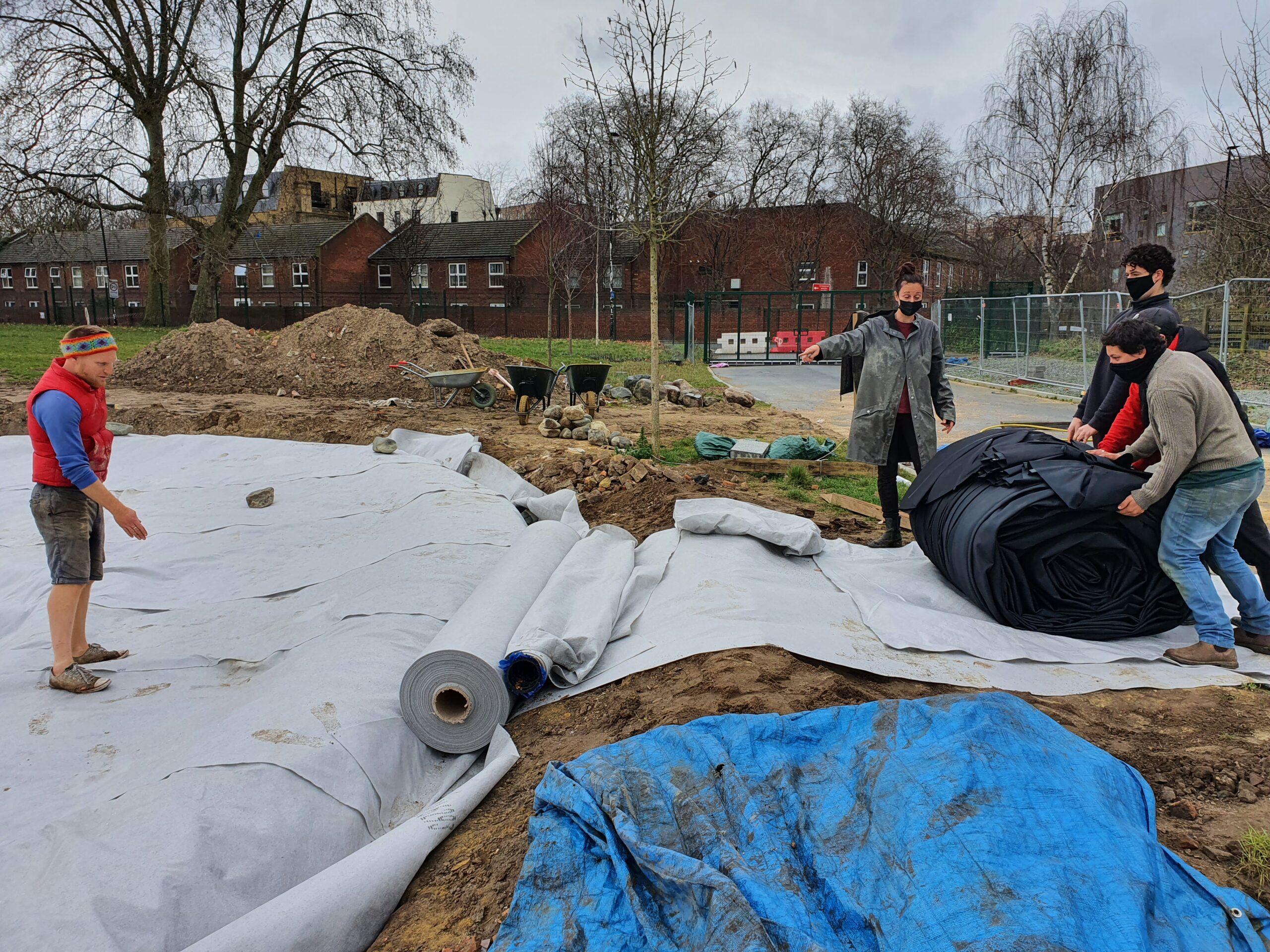
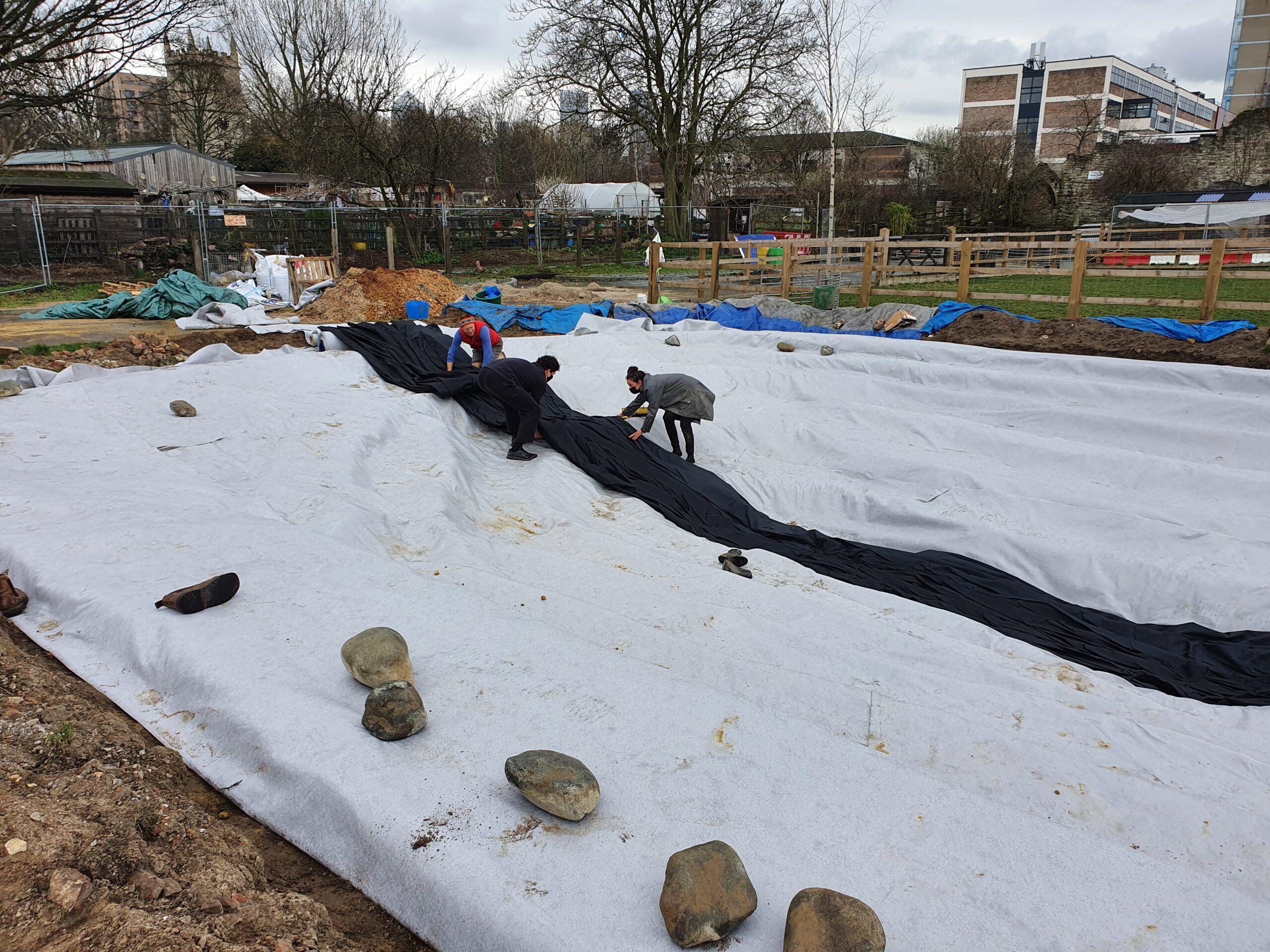
The white underlay was next. With the help of volunteers from GoodGym, we laid it on top of the sand and stuck the strips together using a blow torch before pinning it down with rocks to stop it blowing away.
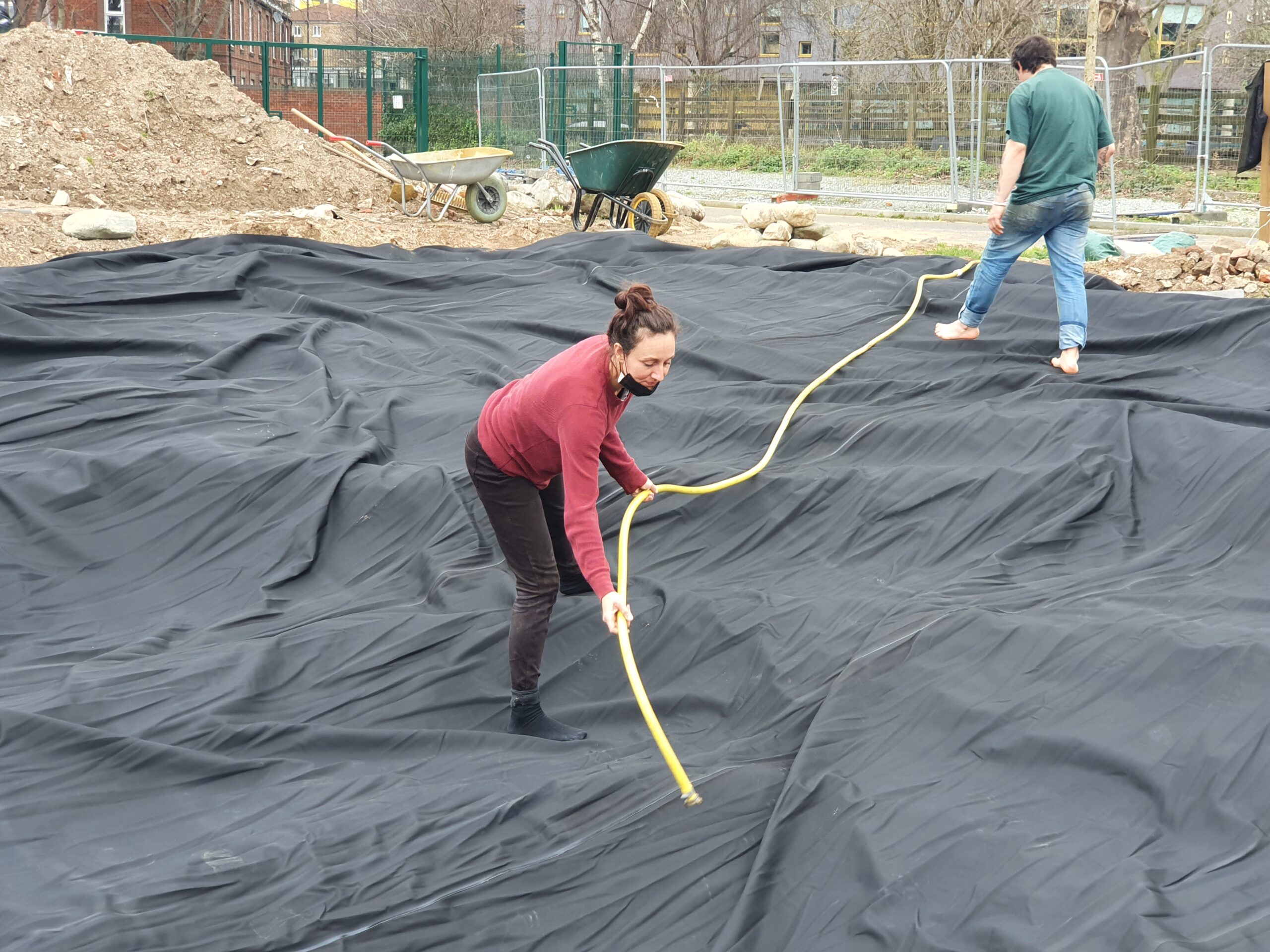
The pond was ready to be lined! We used a tough synthetic Epalyn (EPDM) rubber liner from Russets with a 25 year guarantee. The enormous pond liner was the single largest expense of the project, so we had to do everything possible to ensure that it wouldn’t be punctured. The liner was delivered specially folded to be unfurled across the pond. It took four people to heave it into position on the edge before a carefully controlled roll down to the middle of the pond. We were glad it was half-unrolled by the time we had to push it up the far side! The team all pitched in to pull it out towards the edges and fold it into every contour of the pond. It was important that the liner touched the underlay at every point, or the weight of the water would have ripped it.
Finally, Alex had the exciting honour of switching on the hose! It probably would have taken all night to fill, but thankfully our kind friends at Crossrail had been watching through the fence, and were soon on hand with their fireman’s hose.
Depending on the design, a pond can need continually topping up, especially during the summer, which can be costly and isn’t very environmentally friendly. We navigated this by incorporating a water catchment area into the landscape surrounding the pond. This was a big job in itself, requiring further lining, and the spreading of tonnes of aquatic soil (low fertility soil designed to minimise algae created by the run-off nutrients). Pleasingly, thanks to this extra effort, the pond has maintained its level year-round.
Impact and biodiversity
The main objective of creating the pond was to increase biodiversity in our densely urbanised locale, providing a haven for wildlife and a beautiful calm reflective space for people to enjoy. The next stage once the build had been completed, was to introduce the aquatic planting.
The planting plan was designed with help from Waterside Nursery who then grew the plants to order and delivered them to us at the end of April. It was important to unpack all of the plants and install them in the pond on the same day, at the correct depths, in the right places. This was a fabulous job for our Greencare Volunteers, who by then had returned following the second Covid19 lockdown.

The plants are mainly native to the UK but we have incorporated water hawthorn (which will give some early spring shade-cover for the pond next year, and reduce the algal growth we’ve seen in its first year) and some colourful waterlilies as well. We chose varieties good for wildlife (including dragonflies and newts), for marshy and shallow areas, and included lots of oxygenators to help keep the water clean and clear.
Next, we created more habitats around the pond, including an exposed bank which is perfect for species of digger wasps, bees and ground bugs. A wild grass and flowers mix (for dry sandy soil) was sown by our Greencare volunteers; this should help keep the embankment together and bind the aquatic soil with grass roots, while the wildflowers will offer forage for pollinators. Once the grass is established, groups will be able to sit and play on the area and get a good view of the site.
Donations of cut logs from local tree surgeons allowed us to create an excellent hibernaculum for amphibians. Almost immediately, we saw newts in and around the pond. The water is also being used by starlings, magpies, crows, pigeons and blue tits. We’ve seen mosquito and bloodworm larvae already, which (when hatched) will provide an excellent food source for birds and bats.
The shape of the pond creates lots of underwater and marginal nooks and crannies for amphibians and invertebrates. There are two sides with wide shallow sloping edges to maximise the shallow (and most biodiverse) pond habitats. These also allow hedgehogs and other animals to get close to the water to drink, and to climb out of the pond if they fall in.
Lots of people have asked if we will have fish or ducks in the pond. The answer is no; fish would unbalance the delicate ecosystem of the planting, and duck ponds require constant cleaning due to the waste and muck the ducks leave in the water – although, we haven’t been able to deter the pair of wild ducks who quickly decided that our pond would make an excellent home!
Educational opportunities
As the pond is largely unsupervised and away from the site office, we have fenced it in for safety, given that we have a large number of families with young children visiting. We have, however, ensured that there are good viewing points from both inside and outside the site, allowing visitors to enjoy the ‘blue space’, and increasing local access to nature.
A large pond dipping platform has created opportunities for school groups to get right up to the water and carry out pond dipping sessions, and the surrounding habitats have also proven excellent for bug-hunting. Volunteers now have the opportunity to expand their skills and experience in the ongoing development and maintenance of the pond and the surrounding planting and habitats.

The future
The next stage will be to design and install professional educational signage. More hedgerow and climbing plants will be obtained and planted to cover the fence in natural foliage, and in time we also plan to install more large boulders to improve the aesthetic landscaping of the area, and provide more places to sit and rest.
And the past…
Did you know that Stepney City Farm was the site of a 17th Century moated manor house, known as King John’s Palace? The moat was excavated by the Museum of London during the Crossrail works (for more info about this, see David Sankey’s book Stepney Green: moated manor house to City Farm). To echo the idea of a moat, the pond is edged with kerb stones on one side. Elsewhere on the site, we have planted hops around, as seeds found at the bottom of the moat indicated that hops were historically grown on the site in Tudor times.
We love the idea of connecting the current day Farm with its own pastoral past. Keep an eye out for further blog posts about different features of the site, and how we’re slowly integrating small parts of its history into the present.